


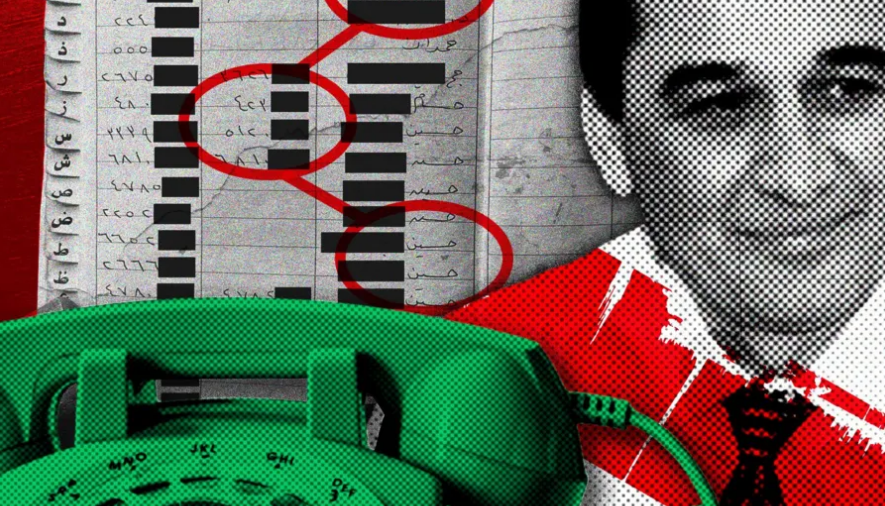
Former Syrian intelligence chief Hussam Luka, accused of torture and involvement in atrocities under ousted President Bashar al-Assad, has been traced to Moscow following an investigation into his disappearance after the fall of the regime.
Luka, known as “The Spider” because of his extensive network of informants and contacts, was one of Assad’s most powerful security officials. He was sanctioned by the United States, Britain and the European Union over allegations linked to abuses committed during Syria’s civil war.
An investigation found evidence suggesting Luka fled Syria after Assad was overthrown in December 2024. His apartment in Damascus contained photographs, official documents, awards from Russia’s foreign intelligence service and a New Year’s card from a senior Russian official.
Luka had previously served as head of the Political Security Directorate in Homs, where government forces besieged rebel-held areas during the conflict. Residents interviewed for the investigation recalled his name and telephone number being displayed on walls, with people encouraged to call for safe passage out of areas affected by fighting.
Some residents said people who contacted the number were allowed to leave, while others allegedly disappeared after making contact.
Luka has also been accused of involvement in the 2015 Eid al-Adha attack in the al-Waer neighbourhood of Homs. The Syrian Network for Human Rights said 28 people were killed, including 17 children and four women. Activists and opposition media at the time alleged that Luka played a role in selecting targets.
By the time Assad’s government collapsed, Luka was heading Syria’s General Security Directorate, giving him authority over one of the country’s most powerful intelligence organisations. Security agencies under the former government were involved in the detention of opposition activists, journalists, doctors and others accused of opposing the regime.
Syria’s Attorney General Hassan al-Turba said authorities had opened a case against Luka over allegations including premeditated murder, torture and deaths resulting from torture. He said a domestic arrest warrant had been issued and that efforts were under way to circulate it internationally and seek Luka’s extradition.
The investigation eventually uncovered a Russian telephone number believed to belong to Luka. A contact in Lebanon helped establish communication with a person identified as the former intelligence chief. During a call, the man answered questions about his past that investigators believed only Luka could answer.
When questioned about allegations of massacres and torture, the man said he could not speak freely because of his situation and declined to meet outside Russia.
Further investigation using another telephone number reportedly linked to Luka placed him in suburban areas around Moscow.
The Russian government did not respond to requests for comment about his alleged presence in the country or whether it would consider an extradition request.
For Syrians seeking accountability for abuses committed under Assad, the discovery has raised concerns that Luka may remain beyond the reach of Syrian authorities. Russia was a major supporter of Assad during the civil war and granted the former president refuge after his removal from power.
Families of those killed and detained during the conflict continue to demand justice, with Luka’s alleged presence in Russia adding to uncertainty over whether senior figures from the former regime will ever face trial.
