


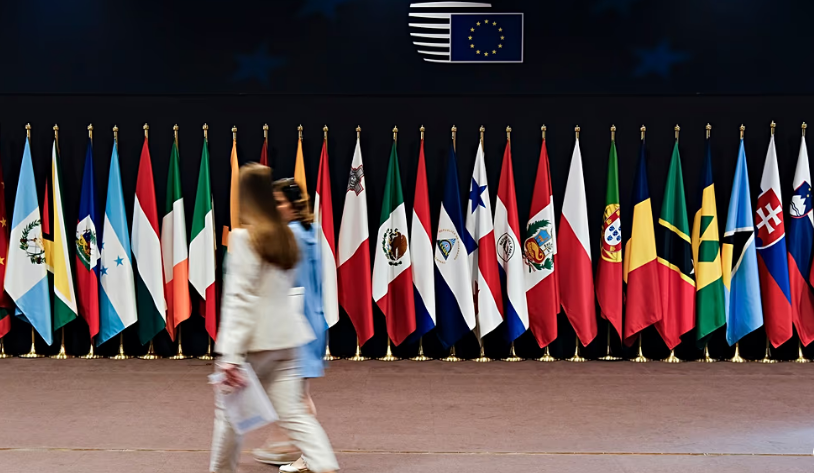
The upcoming EU-CELAC summit in Santa Marta, Colombia, is facing a wave of cancellations from top European leaders, as growing tensions between the United States and Latin America overshadow the event and strain international relations.
German Chancellor Friedrich Merz, French President Emmanuel Macron, Italian Prime Minister Giorgia Meloni, and European Commission President Ursula von der Leyen are among those who will not attend the summit, joining more than two dozen other leaders who have withdrawn. The meeting, once expected to host over 60 heads of state, has now been downgraded to a single-day gathering attended by a limited group of delegations.
European officials cited logistical challenges, overlapping schedules with COP30 in Brazil, and low participation levels among reasons for the cancellations. Yet diplomatic observers believe rising geopolitical friction between Washington and Latin American capitals also played a role in the exodus.
The summit, meant to strengthen trade and diplomatic ties between the European Union and Latin American and Caribbean states, comes amid heightened U.S. pressure on Venezuela. President Donald Trump’s administration has intensified military activity in the Caribbean, targeting what it describes as Venezuelan “drug boats” operating in international waters. Washington accuses President Nicolás Maduro of running a “narco state” and illegally holding power after a disputed 2024 election.
The White House recently deployed an advanced aircraft carrier to the region, fueling speculation that a U.S. intervention could be under consideration. Trump said in a recent CBS interview that while he did not anticipate a full-scale war, he would not rule out “actions” against Venezuela, accusing the country of “treating the U.S. very badly.”
Trump has also clashed with Colombian President Gustavo Petro, the summit’s host, accusing Colombia of aiding illegal immigration and drug trafficking. Petro, who is under U.S. sanctions, said “external forces” are trying to undermine the summit and prevent Latin American nations from “coming together for democracy and freedom.”
Ursula von der Leyen’s absence drew particular attention. Originally scheduled to attend after COP30, she delegated participation to EU foreign policy chief Kaja Kallas. “Due to the low level of participation of heads of state at the EU-CELAC summit, the president made the decision not to participate,” said Olof Gill, the European Commission’s deputy spokesperson.
Von der Leyen’s no-show contrasts with her strong support for EU-Latin America cooperation expressed at the 2023 summit in Brussels. The European Union views Latin America as a strategic partner for diversifying trade and securing access to critical raw materials, with the long-delayed EU-Mercosur trade deal nearing completion.
Despite the high-profile withdrawals, leaders such as Spanish Prime Minister Pedro Sánchez, Portuguese Prime Minister Luís Montenegro, and European Council President António Costa will attend. Costa’s office said he remains “fully committed to the EU–CELAC strategic partnership” and to ensuring the EU remains “a reliable and predictable partner” amid global instability.
