


Also in this newsletter: After US-Iran ceasefire deal, Europe faces tough questions.
A two-week truce agreed by Washington and Tehran on Tuesday has left the world on edge, raising urgent questions for European leaders over security, sanctions, and regional stability.
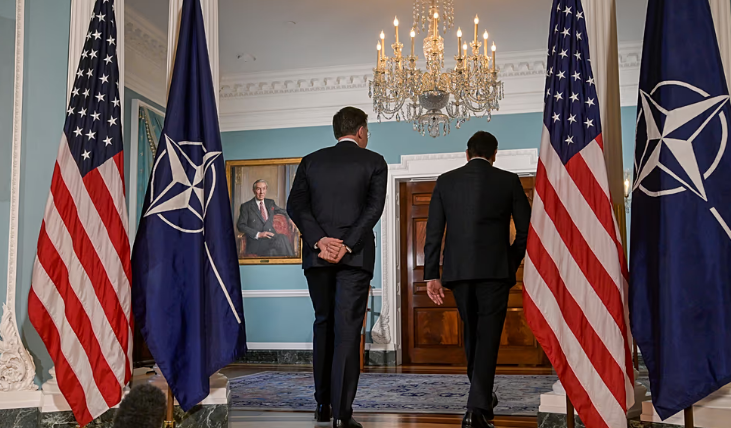
Tensions within the transatlantic alliance surfaced as NATO Secretary-General Mark Rutte met US President Donald Trump in Washington. The meeting, lasting more than two hours, failed to ease pressure on NATO after several member states resisted Trump’s calls to help reopen the Strait of Hormuz during recent weeks. Rutte told CNN that Trump was “clearly” disappointed with many allies but added that “the large majority of Europeans” had been cooperative. Trump expressed frustration on social media, posting, “NATO WASN’T THERE WHEN WE NEEDED THEM, AND THEY WON’T BE THERE IF WE NEED THEM AGAIN.”
Former US ambassador to NATO Ivo Daalder described the situation as the “worst crisis” the alliance has faced, noting that disputes over Iran and threats to withdraw have left NATO divided.
The ceasefire deal between the US and Iran has not settled all issues. Israel’s continued bombings in Lebanon amid the regional truce killed 182 people and injured 890, according to the Lebanese health ministry. Iranian President Massoud Pezeshkian, in a call with French President Emmanuel Macron, stressed that a ceasefire in Lebanon is essential to his ten-point plan. US Vice President J.D. Vance said Lebanon was not included in the deal, focusing on Iran, its allies, Israel, and Gulf states. European leaders including Belgium’s Maxime Prévot, Spain’s Pedro Sánchez, and Italy’s Antonio Tajani have expressed alarm, calling for immediate inclusion of Lebanon in the ceasefire and, in some cases, diplomatic pressure on Israel.
Europe also faces strategic questions about the Strait of Hormuz, a critical corridor for global oil and gas. Europeans have offered to assist in securing the waterway, with French President Emmanuel Macron reporting that about 15 countries are preparing a “strictly defensive mission.” Tehran, however, seeks to maintain tight control of Hormuz, while Trump has suggested a joint venture to charge vessels for transit, which Brussels considers unlawful.
Other issues include potential sanctions relief for Iran, a sensitive topic given Tehran’s support for Russia’s war in Ukraine, and broader security concerns arising from ongoing regional conflicts.
In addition to the ceasefire-related challenges, Europe is following other developments closely. Hungarian Foreign Minister Péter Szijjártó reportedly briefed Russian counterpart Sergey Lavrov on EU deliberations regarding Ukraine’s accession talks, according to leaked audio. In France, two nationals returned home after nearly four years in Iranian detention, while investigations revealed a major global router breach linked to Russian intelligence targeting governments and critical infrastructure.
The US-Iran truce offers a pause in hostilities, but European leaders face difficult choices on sanctions, regional security, and alliance cohesion as they navigate a complex geopolitical landscape.
