


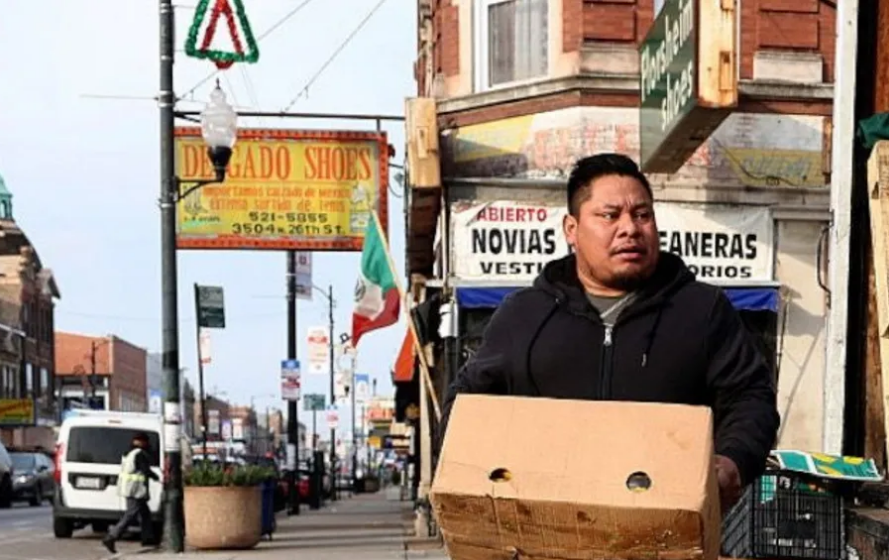
For weeks, attention has focused on Minneapolis after the killing of two US citizens by federal immigration agents sparked widespread unrest. In Chicago, similar federal operations have shaken the city’s Hispanic communities, with Little Village, often called the “Mexican Magnificent Mile,” emerging as a focal point.
Operation Midway Blitz, launched in September by the Trump administration, aims to target “criminal illegal aliens.” Since then, the presence of immigration agents has altered daily life in Little Village, one of Chicago’s key economic hubs. Businesses say customers have stayed home, turning bustling streets into ghost towns.
Carlos Macias, owner of Carniceria y Taqueria Aguascalientes, a grocery and restaurant his father opened 50 years ago, described the impact. “Business has dropped half during the week, sometimes even more. People don’t want to spend money,” he said. Macias recalls a raid on his shop where agents wore balaclavas and carried firearms, leaving employees and customers fearful. “This is my property,” he told them, but the memory of that day still lingers.
The federal crackdown has been justified as necessary to protect US citizens. The Department of Homeland Security says the operation honors Katie Abraham, a 20-year-old student killed in a hit-and-run by an undocumented immigrant from Guatemala. Officials report that more than 800 undocumented migrants have been arrested, including sex offenders, burglars, and gang members. Court records, however, indicate many detainees posed little threat to public safety.
The economic consequences for Little Village are significant. The two-mile corridor generates some of the city’s highest tax revenues outside the downtown Magnificent Mile. Local officials say restaurants and food vendors report sales drops of 30% to 60%, with some small businesses seeing no sales over two-week periods. Alderman Michael Rodriguez described the scene as unprecedented, noting empty restaurants and public parking where activity once thrived.
In response, Chicago has launched initiatives like Shopping in Solidarity, encouraging residents to support local businesses. Christina Gonzalez, owner of Taqueria Los Comales, said she has cut employee hours due to falling demand. “We don’t need 10 waitresses to be serving four tables,” she explained, noting the impact on local employment.
Some residents support the president’s immigration policies. Lupe Castillo, a Little Village Republican and candidate for Congress, said, “I love what he’s doing. There are rules in this country. You can come in, but do it the right way.” Others, like shoe shop owner Adolfo Peña, a Trump voter, say the raids have hurt their livelihoods. “Everyone disappeared,” he said, describing the neighborhood’s sudden quiet.
The Trump administration plans to expand immigration enforcement nationwide, hiring thousands of agents, opening new detention centers, and working with private companies to locate undocumented individuals. Congress has approved $170 billion in funding for ICE and Border Patrol through 2029.
For the residents and business owners of Little Village, daily life has changed. Foot traffic has declined, street vendors are fewer, and fear shapes who works, shops, and socializes. Despite the uncertainty, many remain committed to supporting their community and adapting to the new reality.
