


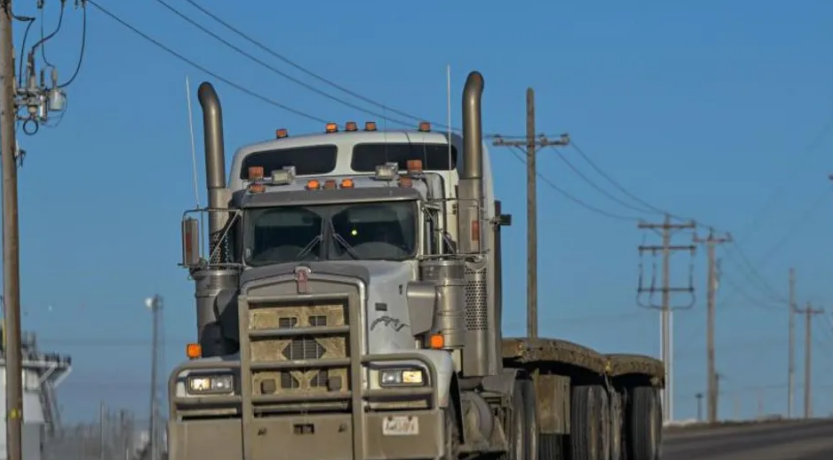
From hauling produce to transporting stage equipment for major country music stars, Canadian trucker Jared has seen the freight industry transform dramatically over his two-decade career. Once reliant on payphones and pagers to find work, he now books jobs using multiple digital devices from his truck cabin, thanks to the rise of freight-matching apps.
“It’s much better for business,” says Jared, who declined to give his surname, as he described his current gig transporting gear across North America. “You just turn on your devices and scan through possible work. It’s all digital and you get paid instantly.”
This shift has been driven by “Uberised” platforms such as Uber Freight and Vancouver-based Freightera, which digitally match drivers with companies needing freight moved. These services have gained popularity in Canada’s fragmented trucking sector, where over 80% of firms employ fewer than five people, according to 2023 data.
But the tech boom comes with a downside. Jared says driver pay has dropped significantly, with rates falling from $3 per mile during the pandemic to as low as $1.10 on some routes. “It’s been a big change,” he says. Rising fuel costs have added to the pressure.
The trend has raised concerns among labour advocates. Teamsters Canada, representing over 130,000 workers, warns that gig-style freight work undermines wages and conditions. “Truckers don’t need another app. We need stronger protections and bigger paycheques,” said spokesperson Christopher Monette.
Platforms like Uber Freight argue their model brings flexibility and choice. A spokesperson said their tools allow drivers to book or bid for loads based on preferences like route, schedule, and equipment. “Our platform also uses real-time market data and AI-powered recommendations,” they added.
Freightera, which launched in 2014, offers a different approach. Co-founder Eric Beckwitt says carriers on the platform set their own prices, enabling them to remain “healthy and profitable.” He says his service simplifies freight logistics and reduces inefficiencies such as empty return trips.
In Africa, similar platforms are transforming logistics. Jean-Claude Homawoo, co-founder of LORI, the continent’s largest digital freight network, says digitisation has lowered shipping costs on key routes like Mombasa to Kampala.
Globally, tech advocates say smarter routing can cut both costs and carbon emissions. Trucking accounts for more than half of trade-related CO₂ emissions, according to a McKinsey report.
Looking ahead, the biggest disruption may still be on the horizon: autonomous trucks. In the US and China, driverless lorries are already undergoing road trials. But for Jared, the human touch remains essential. “Transportation’s been around for hundreds of years,” he says. “Self-driving trucks won’t take over any time soon.”
