


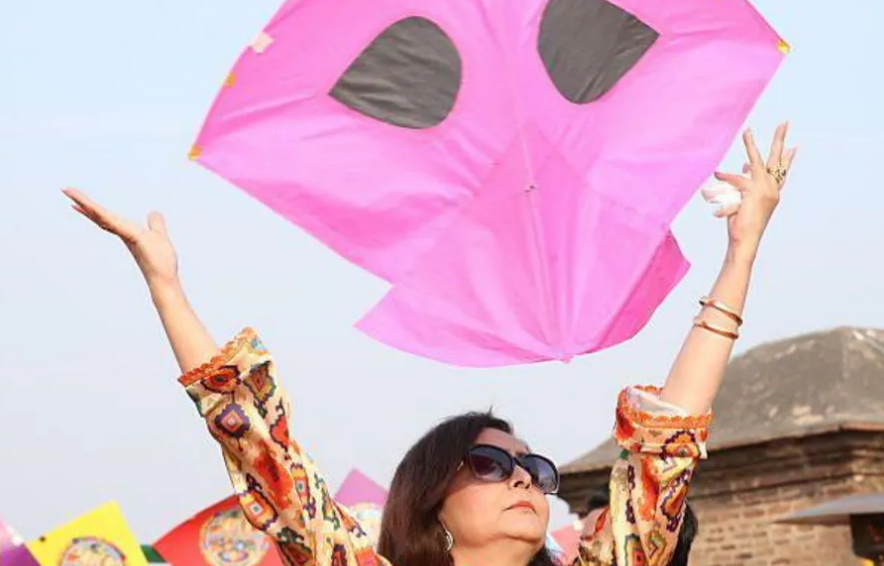
The skies of Lahore are alive once again with colorful kites as the Basant festival, long banned for safety reasons, returns after nearly 20 years. Families and friends filled rooftops across the city, laughing and cheering as kites zig-zagged and soared, marking the start of spring in the historic city.
For many young residents, this is their first experience of Basant. “All our generations here are very excited; the elders know how to fly a kite, but we Gen-Zers don’t know,” said Abu Bakar Ahmad, a 25-year-old tech engineer learning the craft from his cousin. “It’s really difficult!”
For older participants, the festival carries decades of tradition. Kashif Siddiqui, a pharmacist, recalled his last Basant before the ban, noting that now his son participates alongside his own children. “It’s special for Lahoris—this runs in our blood. It’s not about kite and thread, it’s about tradition. My father and his father before him used to do it,” he said.
The festival was banned in 2007 after multiple injuries and deaths, often caused by sharp kite strings, rooftop falls, and celebratory aerial firing. Authorities have now imposed strict safety measures to reduce risk. Basant will run for only three days, large kites are banned, and nets have been placed over certain streets to protect pedestrians. Motorcyclists have been given metal rods on handlebars to prevent threads from causing injuries.
The police have also seized more than 100,000 kites and over 2,100 rolls of string deemed dangerous, Deputy Inspector General Faisal Kamran said. Officers are monitoring rooftops through drones and CCTV to ensure compliance with regulations during the festival. “All these cameras were covering our main roads,” Kamran explained. “We have a good view just to keep a check on activities like if somebody is using banned material or weapons.”
Street vendors and local businesses have welcomed the festival’s revival. Usman, a kite seller in Mochi Gate, said he had sold over 7,000 kites in just a few days. Yousaf Salahuddin, a longtime Basant advocate, highlighted the economic impact: “There was a lot of revenue, and that revenue was going down to the poorest—the vendors on the street, the restaurants in the old city, the people who dyed the clothes, and the people selling shoes, bangles, everything.”
For many, the festival is about more than the kites. Kanwal Amin, 48, emphasized the social aspect, saying, “It’s gathering, it’s love. Flying kites is ok, but the main thing is bonding. I like watching and eating good food.”
The return of Basant has stirred nostalgia and excitement across Lahore, reviving a centuries-old tradition that had been missing from the city’s skyline for nearly two decades.
