


Just over two years ago, when Sheikh Hasina won an election widely condemned as rigged in her favour, it was hard to imagine her 15-year grip on power being broken so suddenly, or that a rival party that had been virtually written off would make such a resounding comeback.
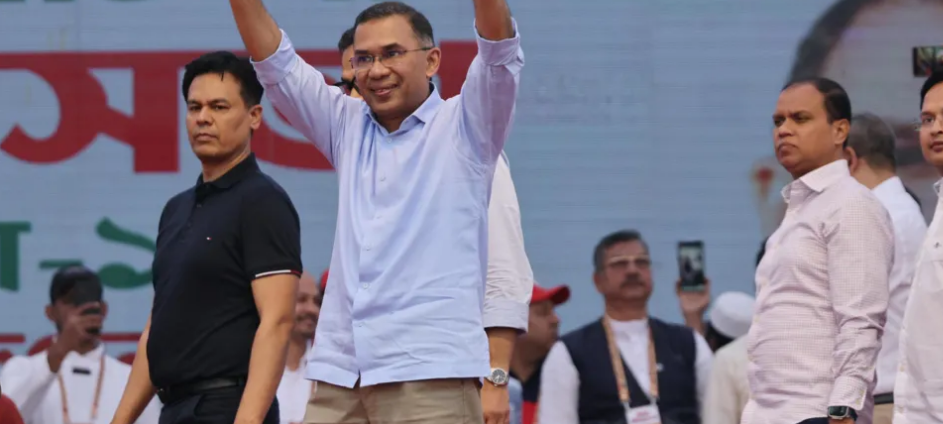
In Thursday’s parliamentary elections, the Bangladesh Nationalist Party (BNP) emerged as a significant force, marking a major shift in the country’s political landscape. This election is the first in which BNP leader Tarique Rahman, 60, formally contested, following the death of his mother, Khaleda Zia, late last year. Zia had led the party for four decades, taking over after the assassination of Tarique’s father, Ziaur Rahman, the party’s founder and a key figure in Bangladesh’s war for independence.
Rahman returned to Bangladesh from a 17-year self-imposed exile in London just days before his mother passed away. Despite facing allegations of nepotism and corruption in the past, political observers say his lack of prior leadership experience may have worked in his favour. “People are willing to give change a chance. They want to think that new, good things are actually possible. So there is a lot of hope,” said political scientist Navine Murshid.
Senior BNP leader Amir Khasru Mahmud Chowdhury told the BBC that the party’s priority is to restore democracy. “All the democratic institutions [and] financial institutions, which have been destroyed over the last decade, we have to first put those back in order,” he said.
The election comes after the “July uprising” of 2024, which forced Hasina to step down. Young voters who took part in the movement are pushing for more than a symbolic victory. “The stepping down of the previous prime minister was not the victory. When our country runs smoothly without any corruption, and the economy becomes good, that will be our main victory,” said Tazin Ahmed, 19, a participant in the uprising.
The new parliament will include many first-time lawmakers. Islamist party Jamaat-e-Islami, banned twice in the country’s history, won a notable number of seats, while the National Citizens Party (NCP), formed by student activists from the uprising, captured six seats. Sociologist Samina Luthfa said the incoming parliament faces steep challenges. “NCP youngsters have a lot to learn. The others are seasoned politicians but they do not have the experience of running the country. So it’s going to be an uphill task,” she said.
Gender representation remains low, with just over 4% of candidates being women. Activists from the July uprising have called on parliament to act quickly to fill reserved seats with skilled and honest female candidates.
The Awami League, barred from participating in this election, remains a controversial figure in the country’s politics. Senior BNP leaders say it will take time before the party can regain credibility. Sheikh Hasina, from exile in India, described the vote as an “election of deception and farce” and called for a new election that includes her party.
Bangladesh now faces pressing tasks: restoring law and order, reviving the economy, creating jobs, and ensuring stability for a youthful population eager for change.
