


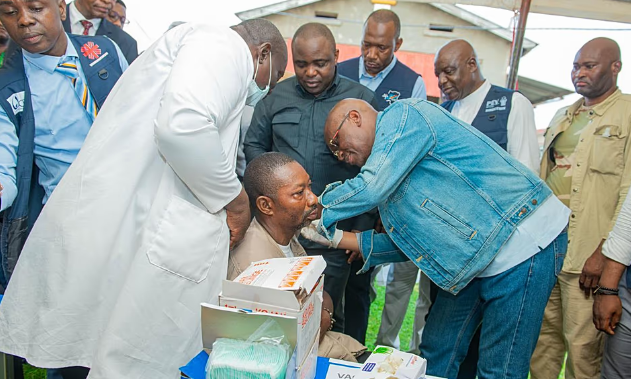
The Democratic Republic of Congo has begun vaccinating people against Ebola as authorities try to contain the country’s fastest-growing outbreak of the disease, while researchers continue testing a vaccine designed specifically for the strain responsible for the current crisis.
The vaccination campaign began on Thursday in Kisangani, the capital of Tshopo province. Health workers and other frontline responders are being prioritised for the Ervebo vaccine, which has previously been effective against outbreaks caused by the more common Zaire strain of Ebola.
Health Minister Roger Kamba said the first priority was to protect people working directly with Ebola patients and communities affected by the outbreak.
Government figures showed that, as of Tuesday, Congo had recorded 5,713 confirmed Ebola cases, including 2,744 deaths. The outbreak is concentrated mainly in Ituri province and has become the deadliest of the country’s 17 Ebola outbreaks.
The situation has been worsened by insecurity, population displacement, large movements of people and a strike by health workers. The World Health Organization has warned that the outbreak remains out of control and could surpass the 2014-2016 Ebola epidemic in West Africa, which killed more than 11,000 people, mainly in Guinea, Liberia and Sierra Leone.
70,000 vaccine doses approved
The WHO said 70,000 doses of Ervebo had been approved for use in Congo. More than 50,000 doses have already arrived, while another 20,000 doses are being allocated to a clinical trial examining whether the vaccine can provide protection against the Bundibugyo strain.
The current outbreak is caused by Bundibugyo virus, for which there is currently no licensed vaccine or treatment specifically approved for the strain.
Ervebo is being administered under a compassionate-use programme, allowing a medical product to be used in serious disease situations when it has not been specifically approved for the particular strain involved.
Health authorities believe the vaccine could offer some protection because the Bundibugyo and Zaire strains are related. However, researchers have yet to establish how effectively Ervebo can prevent illness caused by the current strain.
Placide Mbala Kingebeni, Africa CDC’s director for research, clinical trials and innovation, said information gathered during the vaccination campaign would help scientists assess the vaccine’s performance.
The campaign is expected to cover 14 health zones across Tshopo, Bas-Uele and Haut-Uele provinces. Kamba has urged health workers to receive the vaccine, saying it could help protect them and reduce the risk of transmission into their communities.
New vaccines under testing
Scientists are also working on vaccines specifically targeting Bundibugyo virus. The University of Oxford’s Vaccine Group and Moderna have begun human trials of new candidates.
Both programmes are currently in Phase I, where researchers assess safety, tolerability and the immune response generated by the vaccines.
The combined vaccination and research effort is intended to provide immediate protection for those most exposed to the outbreak while generating evidence that could help deliver a targeted vaccine for future Bundibugyo outbreaks.
