


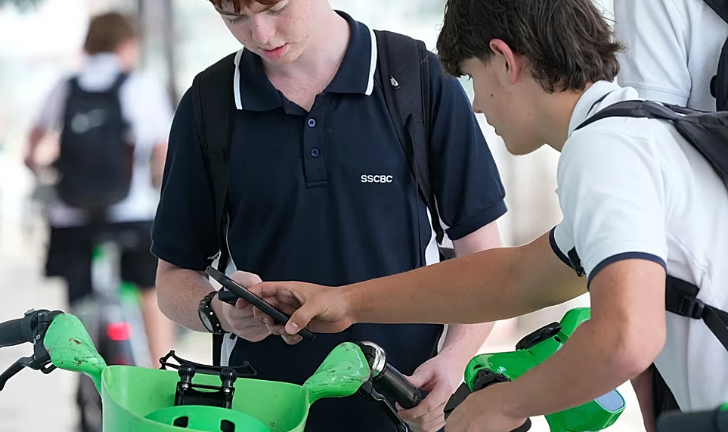
According to France’s health watchdog, one in two teenagers spends between two and five hours a day on their smartphone, prompting French President Emmanuel Macron to accelerate plans to restrict social media access for young users. Macron aims for a ban on social media for children under 15 to take effect by the start of the new school year in September.
In a video released Saturday by French broadcaster BFM-TV, Macron said he had asked his government to initiate an accelerated legislative procedure so the bill could progress quickly and be adopted by the Senate in time. “The brains of our children and our teenagers are not for sale,” Macron said. “The emotions of our children and our teenagers are not for sale or to be manipulated. Neither by American platforms, nor by Chinese algorithms.”
The announcement comes days after the British government indicated it is considering similar restrictions for young teenagers as part of broader efforts to protect children from harmful online content and excessive screen time.
Data from the National Agency for Food, Environmental and Occupational Health and Safety (ANSES) shows that almost 90 percent of young people aged 12 to 17 use a smartphone daily to access the internet, and 58 percent use their devices for social networks. The report highlighted several harmful effects linked to social media, including reduced self-esteem and increased exposure to risky content, such as material related to self-harm, drug use, and suicide. Several French families have lodged complaints against TikTok, claiming that dangerous content contributed to teenage suicides.
Macron also confirmed plans to ban mobile phones in high schools. “We’re banning social networks for under-15s and we’re going to ban mobile phones in our high schools. I think this is a clear rule. Clear for our teenagers, clear for families, clear for teachers, and we are moving forward,” he said. The proposed legislation will be examined in a public session on Monday, with Macron emphasizing that it corresponds to the government’s promise to protect minors from social media and regulate device use in schools.
The move follows similar steps in other countries. In Australia, social media companies have revoked access to around 4.7 million accounts identified as belonging to children under 16. The Australian law has sparked heated debate over privacy, safety, mental health, and technology use, influencing other nations to consider comparable measures.
Macron’s initiative reflects growing concern across Europe about the impact of social media on adolescent mental health. Authorities hope that restricting access and limiting mobile phone use in schools will reduce exposure to harmful content, encourage healthier habits, and support the well-being of children and teenagers in the digital age.
