


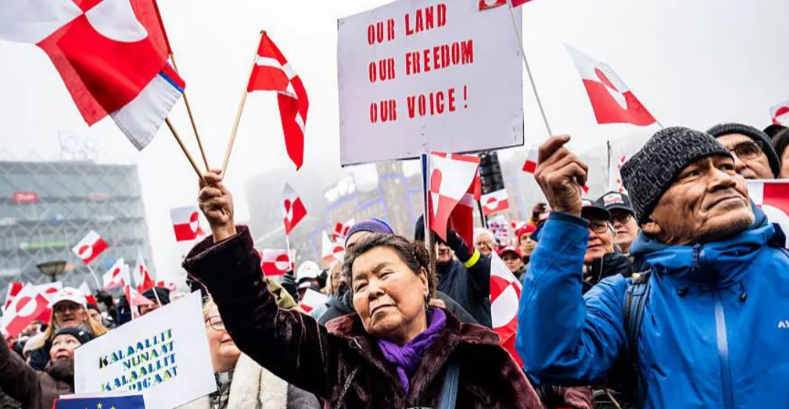
US President Donald Trump has issued a controversial warning to Western allies, suggesting that countries opposing his proposed annexation of Greenland could face economic repercussions, a move that officials and analysts say is without precedent.
Trump’s statement, made via social media, indicated that nations opposing the potential acquisition could see further damage to their trade relations with the United States. Observers described the threat as “surreal” and potentially destabilizing, raising concerns about the future of transatlantic alliances, including NATO.
Analysts say the announcement is unlike any previous US economic action against allies, targeting close partners on extremely short notice over a territorial dispute. “If taken at face value, this is a form of economic pressure being applied by the White House on its closest allies,” said one European trade official, who spoke on condition of anonymity.
The timing and rationale of the threat have left many diplomats puzzled. Officials in affected countries are reportedly more baffled than angry, struggling to determine whether Trump has the political backing in Congress or his administration to carry out such measures. Some observers have suggested that the threat may ultimately not be enforced, following a pattern in which Trump has previously backed down from bold economic moves.
Canada’s experience illustrates how nations might respond to such threats. After facing US trade disruptions, Canada has successfully increased trade with other partners, including a 14 percent growth in commerce with China. Canadian officials, including Prime Minister Mark Carney, have emphasized diversifying trade and seeking engagement with emerging markets, rather than conforming to US demands.
Still, experts warn that even if the tariffs or trade restrictions are minor, the symbolic implications are significant. “The troubling aspect is not the potential 10 percent tariff itself, but the rationale behind it — publicly coercing allies over territorial claims,” said a European economic analyst. “It raises serious questions about American decision-making and could set a concerning precedent if repeated by other major powers.”
Trump is scheduled to meet leaders of allied countries at the World Economic Forum later this week, where the issue is expected to be a key topic. Many diplomats hope that by the time of the summit, the threat will have been softened or withdrawn.
The global reaction has highlighted the sensitivity of US relations with allies and the potential for economic disputes to intersect with geopolitical ambitions. Observers warn that similar actions from other major powers, such as China or Russia, would likely provoke a strong international response, underscoring the unprecedented nature of Trump’s announcement.
For now, officials in Europe and North America are closely monitoring developments, seeking clarification on whether the threat represents a serious policy initiative or another instance of provocative rhetoric.
