


Recent research suggests that dark energy, the mysterious force driving the Universe’s expansion, may be weakening, a finding that could dramatically alter our understanding of cosmology. The controversial results, published by a South Korean team, have sparked debate among astronomers about the long-term fate of the Universe.
The research, led by Prof Young Wook Lee of Yonsei University, re-examined data from supernovas, the same type of exploding stars that first revealed dark energy in 1998. By adjusting the brightness of these supernovas according to the age of their host galaxies, the team concluded that the rate of cosmic acceleration may be slowing.
“If dark energy is not constant and it’s getting weaker, this will change the whole paradigm of modern cosmology,” Prof Lee told BBC News. He added that if dark energy continues to weaken, gravity could eventually pull galaxies back together, potentially leading to a “Big Crunch” rather than the previously theorized “Big Rip,” in which the Universe would tear itself apart.
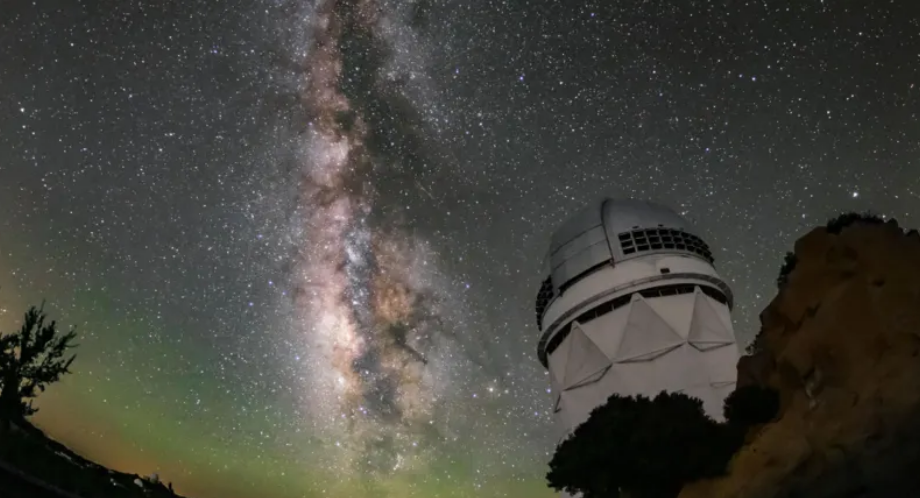
The findings build on earlier unexpected results from the Dark Energy Spectroscopic Instrument (Desi) in Arizona. In March, Desi’s observations of millions of galaxies suggested that cosmic acceleration may have varied over time. Prof Ofer Lahav of University College London, involved with Desi, said the results could require a new mechanism to explain the behavior of dark energy.
The South Korean study has been peer-reviewed and published in a Royal Astronomical Society journal, but it has faced skepticism. Prof George Efstathiou of Cambridge University warned that the correlation between supernova brightness and galaxy age may not be strong enough to draw broad conclusions, describing the results as potentially misleading.
Despite the criticism, Prof Lee emphasized the statistical robustness of his team’s findings. “Our data is based on 300 galaxies. The statistical significance is roughly one-in-a-trillion chance of being a fluke,” he said. Subsequent reassessments by two independent teams have slightly moderated the original results but still support the possibility of changing dark energy.
The debate has energized the astronomical community, with hundreds of papers published exploring the implications of evolving dark energy. Some researchers warn caution, while others see an opportunity to rethink fundamental assumptions about the cosmos.
Prof Robert Massey, Deputy Director of the Royal Astronomical Society, said the controversy highlights humanity’s enduring fascination with the Universe. “Who doesn’t want to understand how the Universe is going to end and how it began? Being able to think about how things will unfold over billions of years is extraordinary,” he said.
As evidence mounts, scientists will continue to examine whether the Universe is indeed signaling a major shift in its expansion or if the anomalies are simply artifacts of measurement. Either way, the question of dark energy’s true nature remains one of the most intriguing puzzles in modern astronomy.
