


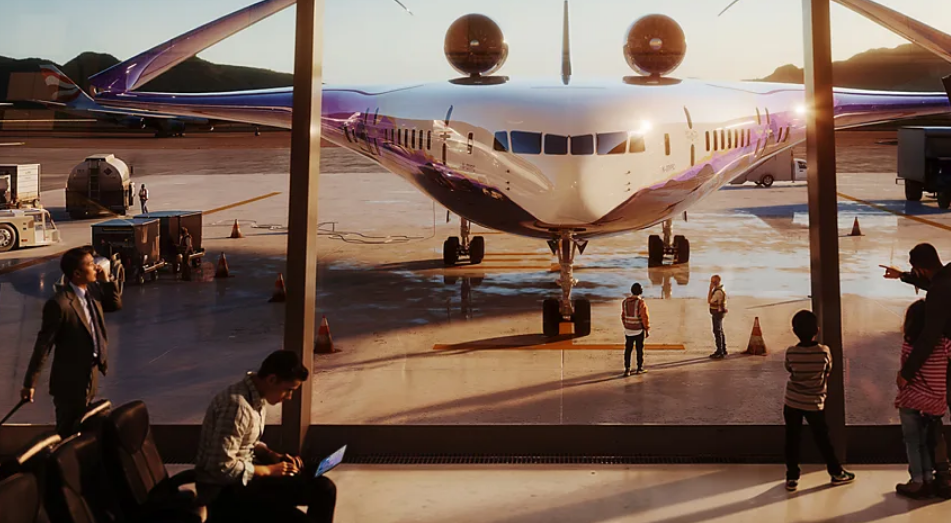
A century-old aviation concept is gaining new momentum as startups race to redefine what the next generation of airliners will look like. The blended-wing aircraft — a design where the fuselage and wings merge into a single aerodynamic structure — is moving from theory to reality, with several companies aiming to make it the next big leap in commercial aviation.
In March 2025, Seattle-based startup Outbound Aerospace marked a small but significant milestone when its scaled test vehicle, nicknamed “Steve,” completed its first 16-second flight at the Pendleton UAS Range in Oregon. While brief, the flight represented the first step toward what the company envisions as a 200- to 250-seat blended-wing airliner called the Olympic, targeted for the 2030s.
The concept of blending wings and fuselage dates back to the 1920s, but until now, it has largely remained within the realm of military research. The growing demand for fuel-efficient, low-emission aircraft is now reviving interest in the design, which promises substantial environmental and economic benefits.
Outbound Aerospace’s co-founder and chief technology officer, Jake Armenta — a former Boeing engineer — said the company moved from concept to flight-ready demonstrator in just 12 months. “The aircraft flying for the first time was exactly nine months from the day we opened our factory doors,” he said. The company claims its innovative manufacturing process could shorten the development time for commercial aircraft from the typical decade-long cycle to just a few years.
Outbound’s prototype is already attracting attention from the U.S. Department of Defense and commercial partners. With its spacious cargo bay and low production costs, the demonstrator could soon enter the market as a cargo drone. “We believe we can drastically reduce development costs, but we still need to generate revenue early,” said Aaron Boysen, the company’s director of business development.
Despite limited funding — about $1 million in pre-seed investment — Outbound has drawn growing interest from investors keen on aviation innovation. Yet, it faces stiff competition. California-based JetZero, another startup pursuing a full-scale blended-wing airliner, has secured $235 million from the U.S. Air Force and investments from United Airlines and Alaska Airlines. JetZero plans to fly its full-size demonstrator, the Z4, by 2027 and has already selected a manufacturing site in North Carolina.
Industry analysts say blended-wing aircraft could transform commercial aviation by reducing fuel consumption and emissions by up to 50%, while offering quieter flights and more spacious cabins. NASA research supports these potential advantages, suggesting such designs could open new routes and reshape air travel norms.
Bill Sweetman, an aviation analyst, says the surge of interest reflects a growing appetite for disruption. “There is a fever among venture capitalists and tech innovators to challenge traditional industries — and aviation is their next target,” he said.
As startups like Outbound Aerospace and JetZero advance, the long-envisioned dream of a blended-wing airliner may finally be within reach — promising a quieter, cleaner, and more efficient era of flight.
