


China’s exports declined in October, marking a setback for the world’s second-largest economy as shipments to the United States fell sharply despite recent efforts to ease trade tensions. Official customs data released on Friday showed global exports dipped 1.1% year-on-year, the weakest performance since February, following an 8.3% rise in September.
The steepest decline came in exports to the United States, which dropped 25% compared to a year earlier. It was the seventh consecutive month of double-digit losses in Chinese shipments to its largest trading partner. The figures highlight the lingering strain on trade relations between Washington and Beijing, even as both sides seek to cool tensions.
Last month, former U.S. President Donald Trump and Chinese leader Xi Jinping met in South Korea and agreed to de-escalate the trade conflict that has disrupted global supply chains in recent years. The two leaders committed to lowering tariffs and delaying new port fees imposed on each other’s vessels. China also suspended some export controls on rare earth materials for a year and pledged to buy more U.S. agricultural goods, including soybeans. In exchange, Washington eased certain sanctions on Chinese firms.
Economists expect the tariff reductions to support export recovery in the months ahead. Goldman Sachs analysts projected that Chinese export volumes could grow by 5% to 6% annually next year, potentially boosting China’s share of global trade.
“The reduction in some of these tariffs as part of the latest U.S.-China trade ‘deal’ may provide a small boost to exports,” wrote Capital Economics economists Leah Fahy and Zichun Huang in a recent report. They said the benefits would likely become visible toward the end of the year.
Wei Li, head of multi-asset investments at BNP Paribas Securities (China), said a more significant rebound could begin in early 2026, accelerating into the second quarter as lower tariffs take full effect.
While exports weakened, China’s imports rose modestly by 1% in October compared to a year earlier, slower than the 7.4% growth recorded in September. Economists attributed the softer pace to the ongoing property sector downturn and subdued consumer spending at home.
The decline in exports was also influenced by a high comparison base from October 2024, when outbound shipments had surged by 12.6%, the fastest growth in over two years.
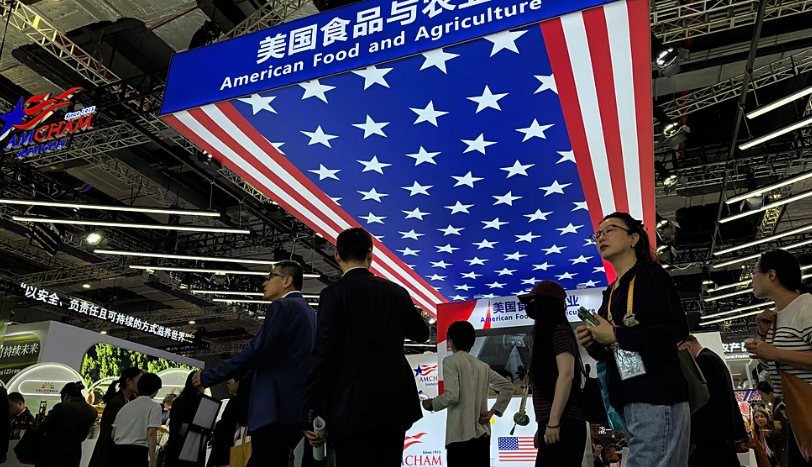
At the annual China International Import Expo in Shanghai this week, Premier Li Qiang sought to reassure global businesses of China’s commitment to open trade. He told business leaders that China would “embrace free markets and free trade” and criticised trade restrictions that, he said, “hurt developing economies and distort fair competition.”
Analysts say China’s export prospects hinge on how quickly the trade thaw with the U.S. translates into sustained demand, as the global economy continues to grapple with uncertainty and slower growth.
