


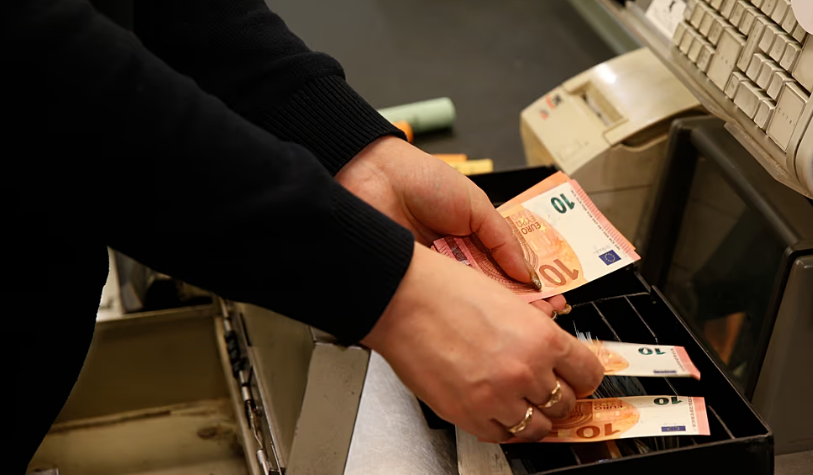
Despite the rapid rise of digital payments across Europe, cash remains the most frequently used payment method in the eurozone, according to new data from the European Central Bank (ECB). The 2024 ECB survey, which covered 40,000 participants across 20 eurozone countries, found that 52 percent of all transactions were paid in cash — though its share drops to 39 percent when measured by total value.
While cash use is steadily declining, banknotes still play an essential role in everyday life across much of Europe. In 14 of the 20 eurozone nations, cash remains the dominant form of payment, accounting for between 45 and 55 percent of all transactions in about half of them. The survey revealed a stark geographical divide between cash-reliant southern and eastern European countries and more digital-focused northern and western economies.
Malta reported the highest share of cash transactions at 67 percent, followed by Slovenia at 64 percent and Italy at 61 percent. Spain also remained heavily cash-dependent, with 57 percent of payments made using banknotes. By contrast, digital payments have taken firm hold in the Netherlands, where just 22 percent of transactions are in cash, and in Finland, where the figure stands at 27 percent.
Among the eurozone’s four largest economies, Germany sits slightly above the regional average at 53 percent, while France is below it at 43 percent — reflecting a stronger embrace of contactless and mobile payments. “Dutch consumers perceive contactless payments as faster and more convenient than cash,” a spokesperson from the Dutch Central Bank told Euronews Business, noting that widespread acceptance and low merchant fees have encouraged digital adoption.
When measured by value rather than volume, cash plays a smaller but still significant role. Lithuania leads the euro area with 59 percent of payment value made in cash, followed by Slovakia, Slovenia, and Austria, each at 56 percent. The Netherlands again ranks lowest, with cash representing just 17 percent of payment value.
The ECB’s findings also show that cash remains the preferred method for small purchases, while cards dominate payments above €50. Many consumers continue to value cash for its anonymity and simplicity — 41 percent cited privacy as the main advantage, while 35 percent said using cash helps them stay aware of spending. Only 18 percent viewed cash as safer than digital options.
Generational trends are also shaping the shift: consumers under 40 now use cash for fewer than half of their transactions, whereas those aged 65 and older still rely on it for 57 percent of payments.
Overall, while digital and contactless payments are expanding rapidly, the ECB data underscores that cash continues to hold a vital place in Europe’s economy — particularly in southern and eastern regions where tradition, accessibility, and trust in physical money remain strong.
