


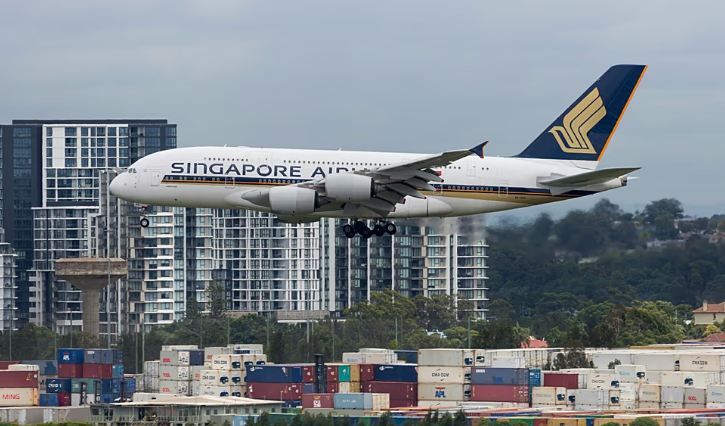
Singapore Airlines has announced a major upgrade to its in-flight connectivity, confirming it will roll out high-speed Starlink internet across its long-haul fleet starting next year. The service will be available free of charge to all passengers, including those travelling in economy class, provided they are members of the airline’s frequent flyer programme.
The airline said the rollout will begin in the first quarter of 2027 and will cover its Airbus A350-900 long-range aircraft, A350-900 ultra-long-range models, and Airbus A380 fleet. Full deployment across these aircraft is expected to be completed by the end of 2029.
The move marks a significant expansion of Singapore Airlines’ existing in-flight WiFi offering, which is already complimentary for passengers. However, the airline said the integration of Starlink technology will significantly improve speed and reliability, enabling activities such as video streaming, online gaming, and real-time work connectivity at cruising altitude.
Starlink, a subsidiary of SpaceX, operates a large network of low Earth orbit satellites designed to deliver broadband internet services worldwide, including in-flight connectivity. The system has been increasingly adopted by airlines seeking faster and more stable internet access for passengers.
Yeoh Phee Teik, senior vice president of customer experience at Singapore Airlines, said reliable connectivity has become an essential part of modern air travel. He noted that the airline already provides one of the most extensive free WiFi services in the industry, but the introduction of Starlink will further enhance the passenger experience by ensuring seamless access from take-off to landing.
The announcement places Singapore Airlines among a growing number of global carriers investing in satellite-based internet services. Early adopters include Hawaiian Airlines and Qatar Airways, which were among the first to sign agreements for Starlink integration in 2024.
Several European airlines have also begun rolling out or planning similar services, including British Airways, Air France, Lufthansa Group, Virgin Atlantic, and SAS. Regional carriers such as airBaltic and Iberia have also joined the trend.
The Lufthansa Group, which operates several major European airlines, is expected to begin its rollout later this year, expanding satellite connectivity across its network.
While most carriers focus on improving productivity and entertainment options, some airlines have taken more flexible approaches. British Airways, for example, has indicated it will allow voice calls over its Starlink-enabled WiFi, a move that has sparked debate among passengers about in-flight etiquette.
The rapid adoption of satellite internet reflects a broader shift in aviation, where digital connectivity is increasingly seen as a core part of the travel experience rather than an optional extra.
