


A new study has raised concerns about the growing strain on Europe’s energy systems as the region accelerates efforts to expand its artificial intelligence capabilities. The report, published by Interface, highlights mounting pressure on electricity grids caused by the rapid rise of power-hungry data centres.
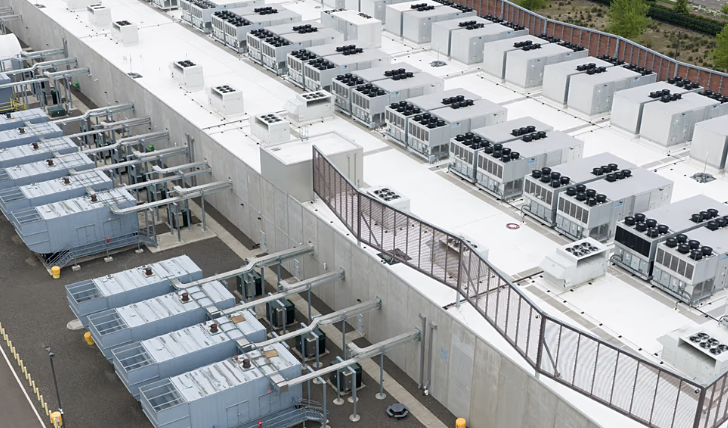
These facilities, which house the computing systems behind AI tools, are becoming larger and more energy-intensive. Every interaction with an AI system depends on vast networks of servers that require significant electricity to process and respond to queries. As demand for AI grows, so does the need for more data centres, placing additional stress on infrastructure that was not designed for such loads.
According to the study, Europe currently has around 3,400 data centres, compared to roughly 5,400 in the United States. While European policymakers aim to close this gap, the report warns that doing so could come at a high cost if energy systems are not upgraded in parallel.
Modern AI facilities can consume enormous amounts of power. The report notes that leading AI clusters have increased their capacity from about 13 megawatts in 2019 to as much as 300 megawatts in recent projects. This level of consumption is comparable to the electricity needs of hundreds of thousands of households, raising concerns about sustainability and competition for limited energy resources.
The strain is already visible in key European markets, particularly in cities known as the FLAP-D group—Frankfurt, London, Amsterdam, Paris, and Dublin. These hubs have become central to the continent’s data centre industry, but developers now face long delays in securing grid connections. In some cases, projects are waiting between seven and ten years, with delays extending even further in highly congested areas.
Several countries have begun imposing restrictions. Ireland has paused new data centre developments in Dublin until 2028, while limits on new connections have also emerged in parts of the Netherlands and Germany. Rising electricity prices have added to the challenge, prompting some companies to reconsider or delay planned investments.
The report also pointed to the growing global demand for energy driven by AI. Projections from the International Energy Agency suggest that electricity use by data centres could more than double by 2030, largely due to expanding AI workloads.
Researchers warned that without changes to planning and infrastructure, Europe risks building costly facilities that cannot operate at full capacity. They recommend closer coordination between data centre development and energy policy, including aligning projects with renewable energy availability and integrating them into long-term grid planning.
The findings underline a key challenge for Europe as it seeks to compete in the global AI race while managing the limits of its energy system.
