


Oil prices jumped sharply on Monday while European stock markets slipped, as renewed tensions between the United States and Iran disrupted shipping through the Strait of Hormuz, a key route for global energy supplies.
Benchmark US crude rose 5.6 percent to $87.20 a barrel, while Brent crude climbed 5.3 percent to $95.16. The gains came after Iran reversed a brief decision to reopen the strategic waterway, and Donald Trump confirmed that a US naval blockade on Iranian ports would remain in place.
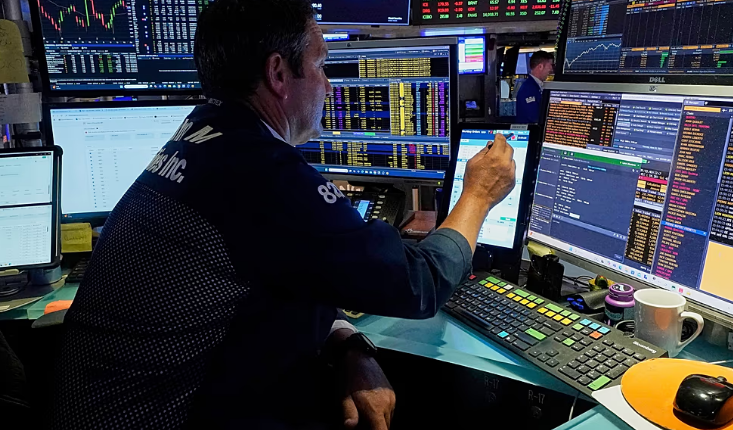
The renewed uncertainty weighed on European equities. The FTSE 100 fell 0.4 percent, while France’s CAC 40 dropped 1.1 percent and Germany’s DAX declined 1.3 percent. Italy’s FTSE MIB also traded lower, down 1.2 percent.
In contrast, Asian markets showed resilience despite the rising geopolitical risks. Japan’s Nikkei 225 gained 1 percent, South Korea’s Kospi rose 1.1 percent, and Hong Kong’s Hang Seng Index added 0.8 percent. Mainland China’s Shanghai Composite and Taiwan’s Taiex also posted gains.
Market analysts pointed to growing unease among investors. Stephen Innes of SPI Asset Management said recent stock market gains appeared to be driven more by momentum than confidence, warning that expectations may have run ahead of reality.
The latest developments mark a sharp reversal from Friday, when oil prices dropped and US markets rallied after Iran signaled the strait would remain open. The S&P 500 reached a record high, while the Dow Jones Industrial Average and Nasdaq Composite also posted strong gains, buoyed by hopes of easing tensions.
However, optimism faded after Washington reaffirmed its blockade policy. Trump said the restrictions would stay in place until a broader agreement is reached, although he indicated that negotiations were progressing. He also reported that US forces had seized an Iranian-flagged cargo vessel accused of attempting to bypass the blockade, prompting Tehran to condemn the move and warn of a response.
The standoff has raised concerns about global energy supplies, as roughly one-fifth of the world’s oil passes through the Strait of Hormuz. Any prolonged disruption could push fuel prices higher and increase costs across industries.
A fragile two-week ceasefire between the two countries is due to expire later this week, adding to uncertainty in financial markets. Since the conflict began, investor sentiment has swung between optimism over a diplomatic breakthrough and fears of a wider economic impact.
Currency markets showed modest movement, with the US dollar edging higher against the Japanese yen, while the euro also posted slight gains against the dollar.
Investors are now closely watching developments in the Gulf, as the direction of oil flows and diplomatic talks continues to shape global market trends.
