


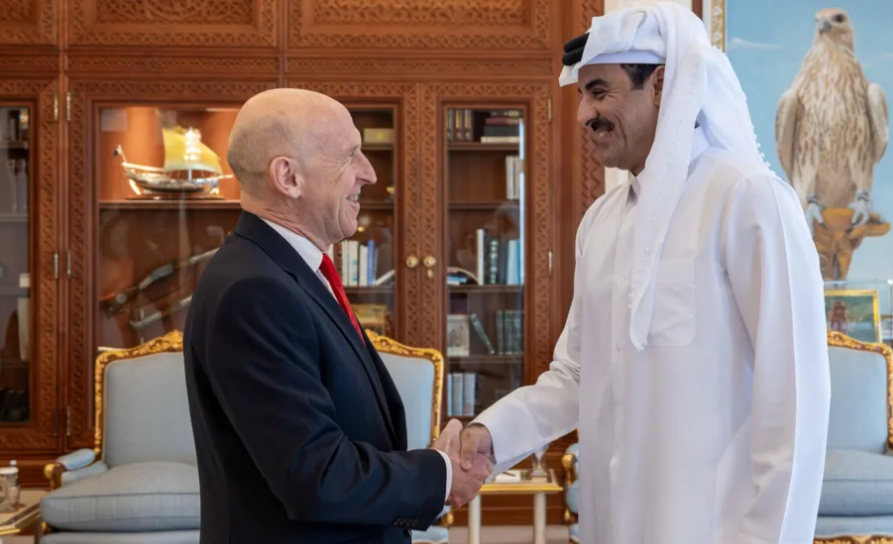
The United Kingdom will send extra troops and deploy more air defence systems to the Middle East, increasing its personnel in the Gulf and Cyprus to around 1,000, Defence Secretary John Healey announced on Tuesday. The move comes in response to Iranian attacks on the region and aims to bolster defensive capabilities for Gulf allies.
Healey, visiting Saudi Arabia, Qatar, and Bahrain, said additional air defence teams and systems would be deployed to Saudi Arabia, Bahrain, and Kuwait. The deployment will also include the extension of Typhoon fighter jets in Qatar, reinforcing the UK’s aerial presence.
“My message to Gulf partners is: Britain’s best will help you defend your skies,” Healey said, highlighting the praise from regional governments for the UK’s contributions, which they described as “a cornerstone” of their defence.
The UK’s approach remains focused on “defensive action.” Prime Minister Sir Keir Starmer reiterated on Monday that the country would not be drawn into the Iran conflict but would continue to defend its interests and support allies. Healey echoed this, noting that Iranian attacks had been expanding and warning that the conflict could continue for “some weeks.”
The announcement follows recent damage to civilian infrastructure in Kuwait, including a power and desalination plant, underscoring regional vulnerability. Qatar earlier warned that attacks on its civilian infrastructure threaten the broader Gulf region.
Visiting the UK Armed Forces at Dukhan air base in Qatar, Healey confirmed the extension of Typhoon jet operations. Four additional jets were sent earlier this month, following the initial deployment of the joint UK-Qatari Typhoon squadron in January.
In Saudi Arabia, the UK will deploy the Sky Sabre air defence missile system this week, along with teams to operate the system. Comprising radars, a control node, and missile launchers, the system is capable of intercepting aircraft and munitions and will integrate with existing regional defences.
Other systems already in the region include the Lightweight Multirole Missile launcher in Bahrain, integrated by UK experts, and the Rapid Sentry ground-based air defence system in Kuwait.
While the UK continues to provide support, Starmer stressed that British forces will not be deployed on the ground in Iran. The UK previously allowed US forces to use British bases for “defensive” strikes against Iranian missile sites, while denying requests for initial US-Israeli operations in February.
US President Donald Trump has criticised the UK and other NATO allies for not participating more directly. On Tuesday, he suggested the UK should “get your own oil” from the Strait of Hormuz and urged nations to take direct action.
Healey dismissed the criticism, noting the close military and intelligence cooperation between the US and UK. British planners are working with the US on options to keep the Strait of Hormuz open, including the potential use of autonomous drones to clear mines if needed.
The new deployments underline the UK’s strategy of defensive support while avoiding escalation in the region, even as tensions with Iran continue to mount.
