


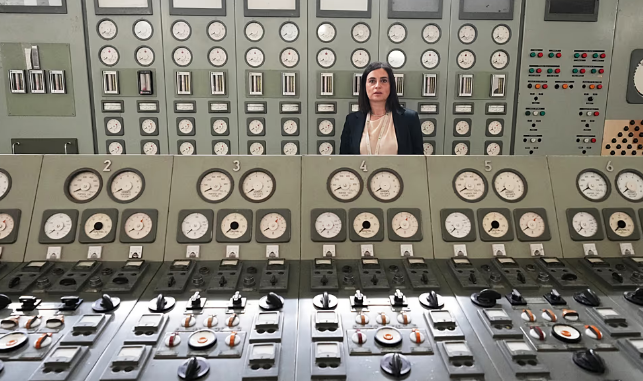
Italy is preparing for one of its biggest energy policy shifts in decades as Prime Minister Giorgia Meloni’s government moves to revive nuclear power, nearly 40 years after the Chernobyl disaster prompted the country to abandon the technology.
Parliament is expected to vote next week on legislation that would establish a legal framework for next-generation nuclear technologies, including small modular reactors (SMRs). If approved, the government will have 12 months to draft detailed regulations covering reactor licensing, safety standards, waste management and site selection.
Environment and Energy Security Minister Gilberto Pichetto Fratin said the government’s immediate goal is to create the legal conditions needed for future investment rather than authorize reactor construction.
“The duty of the government at this moment is to create the conditions so that those who will eventually decide on installations will be able to do so,” Pichetto Fratin told The Associated Press.
Italy once operated four nuclear reactors before a 1987 referendum, held in the aftermath of the Chernobyl disaster, effectively ended the country’s nuclear program. A second attempt to restart nuclear energy was rejected in 2011 after the Fukushima accident in Japan, when nearly 94 percent of voters opposed plans for new reactors.
The government argues that growing electricity demand, climate commitments and energy security concerns following conflicts involving Ukraine and Iran have created a strong case for bringing nuclear power back into Italy’s energy mix.
Pichetto Fratin said electricity demand could rise by at least 30 percent over the next decade, making it necessary to diversify energy sources beyond renewables. Instead of building the large nuclear plants of the past, the government is promoting SMRs, which supporters say are safer, quicker to construct and better suited to modern electricity systems.
The minister estimated that the first next-generation reactors could begin operating between 2033 and 2035.
Public opinion appears to be shifting, particularly among younger Italians. A June 2026 survey by research firm Only Numbers found that about 55 percent of respondents support next-generation nuclear plants.
Viviana Cruciani, who oversees nuclear decommissioning at the state-owned company Sogin’s Latina nuclear site, said attitudes often differ by generation.
“There is a generation that came right after Chernobyl that still sees nuclear energy in light of the accident at Chernobyl only,” she said. “But there is another generation, a lot younger, that is enthusiastic about nuclear.”
Energy adviser Michele Governatori of climate and energy think tank ECCO said younger people are generally more likely to associate nuclear power with technological progress than with past disasters.
Despite growing support, significant challenges remain. Critics argue that the economics of nuclear power remain uncertain, particularly for SMRs, which have yet to be widely deployed commercially. Industry estimates suggest a single 300-megawatt reactor could cost between €3 billion and €6 billion before infrastructure and grid connection expenses.
Governatori warned that high construction costs and limited private investment could undermine the government’s plans. Pichetto Fratin acknowledged that nuclear energy would not reduce electricity bills immediately but said it could help lower costs over the longer term.
The most difficult political hurdle may be deciding where future reactors and nuclear waste facilities should be located. Italy still lacks a permanent repository for existing nuclear waste, and experts expect strong local opposition to any proposed sites.
Analysts say that while Parliament may approve the legislation, future reactor projects could still face legal challenges, political resistance and even another national referendum once specific locations are announced.
