


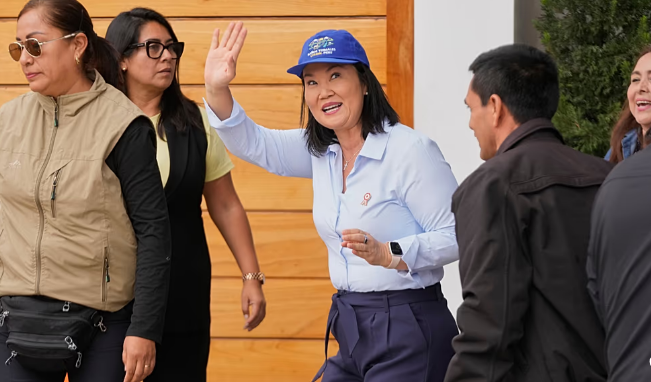
Conservative politician Keiko Fujimori has been declared the winner of Peru’s presidential runoff election, securing the country’s highest office after a closely contested race dominated by public concern over rising crime and insecurity.
The 51-year-old, who was making her fourth attempt to become president, will take office later this month as Peru’s ninth president in the past decade. Her victory was officially certified by the country’s top election authority following the completion of the vote count.
According to the final election results, Fujimori received 9,223,000 votes, representing 50.135% of ballots cast. Her opponent, nationalist congressman Roberto Sánchez, secured more than 9,173,000 votes, or 49.865%, making the contest one of the closest presidential elections in Peru’s recent history.
Both candidates advanced to the June 7 runoff after finishing ahead of 33 other contenders in the first round of voting held in April.
The campaign was largely shaped by growing concerns over violent crime, particularly extortion carried out by organised criminal groups. Public anxiety over security has increased in recent years as criminal networks have expanded their activities across several parts of the country.
Throughout her campaign, Fujimori pledged to tackle crime with a tough security strategy, promising stronger action against organised gangs and measures aimed at restoring public order. Her law-and-order message resonated with many voters who identified crime as one of the country’s most urgent challenges.
The election result also marks another chapter in the Fujimori family’s long and controversial political legacy.
Keiko Fujimori is the daughter of former president Alberto Fujimori, who governed Peru during the 1990s. His administration is widely credited with defeating the Shining Path insurgency, which had carried out years of violent attacks across the country. At the same time, his government drew widespread criticism for authoritarian practices and human rights violations.
In 2009, Alberto Fujimori was convicted on charges related to human rights abuses committed during the fight against the insurgency. He was later found guilty in separate corruption cases, leaving a legacy that continues to divide public opinion in Peru.
Political analysts say Keiko Fujimori now faces the challenge of uniting a deeply divided electorate while addressing the country’s security concerns and economic pressures. The narrow margin of victory reflects a closely split electorate and suggests her administration will begin its term under intense public scrutiny.
As she prepares to assume office, Fujimori has pledged to prioritise public safety and strengthen institutions in an effort to restore confidence after years of political instability that have seen Peru cycle through multiple presidents in a short period.
