


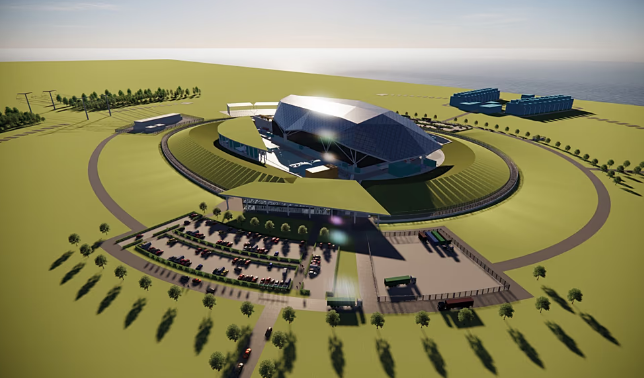
Rolls-Royce SMR has secured a multi-billion-pound contract to construct three small modular nuclear reactors in Sweden, marking a significant expansion of the UK engineering group’s presence in Europe’s emerging nuclear energy sector.
The agreement follows a competitive selection process that began in 2022 and positions Rolls-Royce’s nuclear division as the chosen partner for Videberg Kraft in delivering Sweden’s next generation of nuclear power infrastructure. The reactors will be built at the Värö Peninsula on Sweden’s west coast and are expected to form the country’s first new nuclear power plant in more than four decades.
According to Rolls-Royce, the project will provide a major boost to energy supply in southern Sweden, supporting both households and industrial demand as the country transitions toward more stable low-carbon power sources. The company did not disclose the financial terms of the deal, but the UK government described it as a “major multibillion-pound export win,” highlighting its importance for British industry and clean energy exports.
The announcement was welcomed by officials in London, who said the project would support thousands of skilled jobs, strengthen supply chains, and deepen energy cooperation between the UK and Sweden. Shares in Rolls-Royce rose 1.8 percent in early trading following the news, reflecting investor optimism over the company’s growing nuclear pipeline.
Rolls-Royce SMR chief executive Tufan Erginbilgic said the selection reinforces the company’s position as a leading European developer of small modular reactor technology, noting that it now holds multiple contractual commitments across the continent. The Swedish project follows earlier agreements, including a deal with the Czech Republic’s CEZ Group and a partnership with Great British Energy – Nuclear to develop SMRs in the UK.
Small modular reactors are seen as a key component of Europe’s long-term energy strategy, offering lower-carbon electricity generation with greater flexibility than traditional nuclear plants. Typically producing between 20 and 300 megawatts, SMRs are designed to be manufactured in modules and assembled on-site, reducing construction time and cost.
The European Union has identified SMRs as a strategic technology for achieving energy security and decarbonisation goals, adopting a dedicated strategy in 2026 to accelerate their deployment. Industry forecasts suggest the technology could play a major global role by mid-century, with the International Energy Agency estimating that more than 1,000 SMRs could be deployed worldwide by 2050 under supportive policy conditions.
With the Swedish contract, Rolls-Royce SMR strengthens its position in a rapidly expanding market where governments are increasingly turning to nuclear energy as part of long-term clean power planning.
