


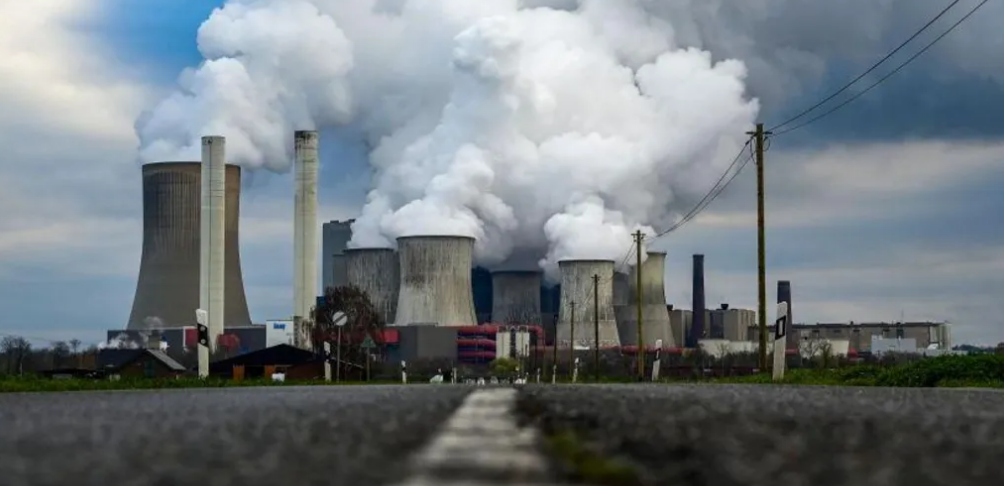
Germany has long used the term Kohleausstieg to describe its planned exit from coal power generation, a cornerstone of its energy transition policy. The country, Europe’s largest coal consumer and the fourth largest globally after China, India and the United States, has committed to phasing out coal entirely by 2038, with a more ambitious target of ending lignite use by 2030.
Coal still accounts for around 20% of Germany’s electricity generation, though the government has steadily increased its reliance on renewables. Last year, wind and solar together provided about 59% of the country’s power mix. To balance intermittent renewable supply, Germany has turned to natural gas, which currently makes up roughly 13% of electricity production.
The transition, however, is under renewed pressure. A spike in global gas prices following geopolitical tensions has forced several countries, including Japan and Italy, to reconsider the pace of their coal reductions. Germany is now facing similar questions about whether its exit timeline remains realistic.
Chancellor Friedrich Merz has already signalled concern, warning that energy security must not be compromised. He has argued that rigid phase-out plans could threaten industrial stability if power supply and pricing are not guaranteed.
At the heart of the debate is Germany’s resource imbalance. The country holds vast reserves of lignite, a cheap and domestically available form of coal, making it a reliable energy source in times of crisis. By contrast, Germany imports around 95% of its natural gas, exposing it to volatile global markets.
Nuclear power is no longer part of the equation after Germany shut down its final reactors in 2023, narrowing its backup options further.
Energy companies have welcomed the possibility of a slower transition. LEAG, one of Germany’s largest lignite producers, has argued that domestic coal provides a critical buffer for supply security, particularly after the loss of Russian gas imports in 2022.
Industry voices are also pressing for clarity. The German Chemical Industry Association has warned that businesses need stable and affordable energy to continue investing domestically. At the same time, environmental researchers argue that increasing coal use would undermine climate targets and delay investment in cleaner technologies.
Within government, divisions remain sharp. The Social Democratic Party has cautioned that extending coal use risks locking Germany into fossil fuel dependency, while members of the Christian Democratic Union emphasise affordability and industrial competitiveness.
One compromise under discussion involves keeping several hard coal plants on standby or allowing limited extended operation to support grid stability during peak demand.
A parliamentary committee is currently reviewing these options, with a formal assessment of the coal phase-out due later this year. The review will evaluate energy security, pricing, and supply risks, and could determine whether Germany sticks to its 2030 lignite deadline or slows its transition.
For now, Germany’s energy path remains uncertain, caught between climate ambition and the practical demands of industrial stability.
