


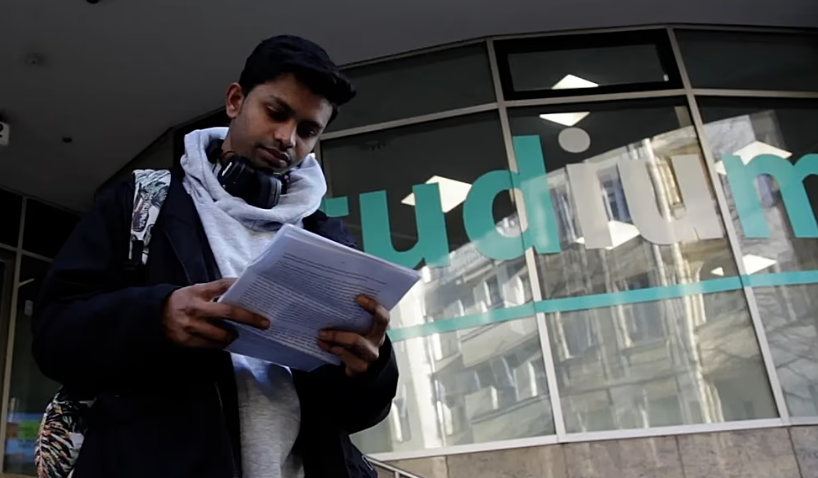
High tuition fees and broken promises have left Indian students at the International University (IU) in Germany struggling with legal and financial challenges. For many, the dream of studying abroad has turned into a nightmare. “My life feels like hell,” one student told Euronews.
Deep Shambarkar, 25, moved from Maharashtra to Berlin last July to pursue a master’s in business management at IU, a private university. He has already invested around €20,000, funded through a student loan from India. Instead of focusing on his thesis, Shambarkar now faces deportation after the Berlin Immigration Office (LEA) sent a letter ordering him to leave the country by November 3.
Shambarkar believes the university lacked the proper accreditation for its courses. “They said that the appropriate infrastructure was lacking. There are too few professors at the university,” he said. He has filed an appeal but has little hope of a positive outcome. Since March, authorities have reportedly asked around 300 students to leave because IU studies are not recognised as face-to-face teaching, despite promises of in-person programs in Germany.
Many students have returned home or transferred to other universities. Tanishq, a 20-year-old from Delhi, completed the first year of his business administration degree but is stuck in India as his visa has not been granted. “I feel cheated,” he said in a video interview. Tanishq has already invested a year in the program but plans to continue his studies at another university while learning German.
IU, one of Germany’s largest universities with over 130,000 students, including roughly 4,500 Indians, acknowledged the situation. The university said it “regrets” that students must leave and cited recent changes in LEA regulations for hybrid programs that were implemented without prior notice. New rules set to take effect in 2026 aim to ensure face-to-face programs meet all requirements for visa issuance. In some cases, students can complete studies from home without additional costs.
Students describe the Berlin campus as more office-like than academic, located in converted hotel space alongside shops. Contacting IU has been difficult, and Shambarkar said the university now covers legal fees for appeals. “It’s hard to face the situation – mentally and physically. I’m treated like a criminal,” he said. Another student described the experience as psychologically damaging, leading to insomnia, nightmares, and a loss of appetite.
Amid legal uncertainties, IU plans to suspend all new international admissions at its Berlin campus. A court confirmed the university has the required accreditation and staffing but tightened attendance and on-campus examination requirements. IU also intends to open a new campus in Cologne in October 2026.
For students like Shambarkar and Tanishq, the setback has been a harsh reminder of the challenges faced by international students navigating legal, financial, and administrative hurdles abroad.
