


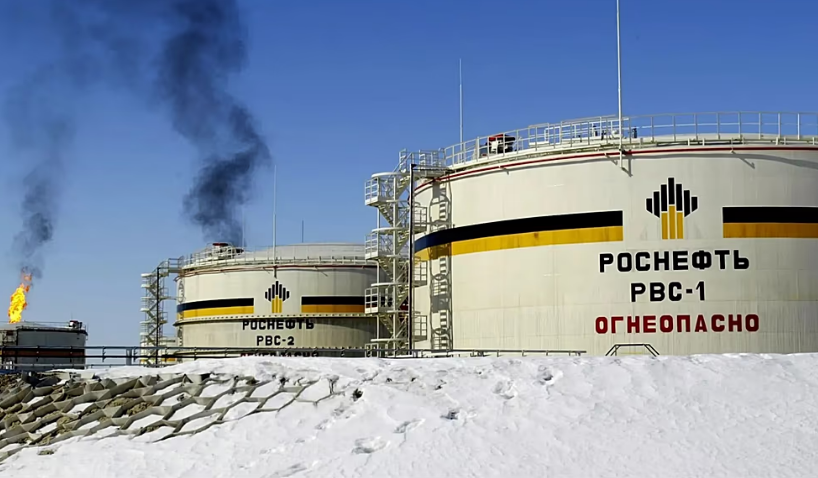
Hungary will take the European Union to court over the bloc’s plan to phase out all Russian energy imports by the end of 2027, Prime Minister Viktor Orbán announced on Friday. The decision marks the latest clash between Budapest and Brussels over sanctions targeting Moscow since Russia’s full-scale invasion of Ukraine in 2022.
Speaking on state radio, Orbán accused the EU of attempting to bypass his government’s veto power on sanctions by shifting the issue to trade rules. “We are turning to the European Court of Justice in this matter,” he said, calling the proposal “a flagrant violation of European law, the rule of law and European cooperation.” He warned that EU institutions “will pay a very high price for this.”
Hungary, which has long relied on Russian oil and gas, has repeatedly pushed back against sanctions that threaten its energy supply. The country is landlocked and remains heavily dependent on Russian fossil fuels delivered through established pipeline routes. Since 2022, Budapest has sought exemptions and pledged to oppose measures that could force a rapid shift away from Russian energy.
Orbán’s latest comments follow a visit to Washington, where he secured a temporary exemption from US sanctions on two major Russian energy pipelines: TurkStream for gas and Druzhba for oil. He announced the exemption after meeting US President Donald Trump, saying Hungary had “been granted a complete exemption from sanctions” affecting fuel delivered through those routes.
“We asked the president to lift the sanctions,” Orbán told reporters. “We agreed and the president decided, and he said that the sanctions will not be applied to these two pipelines.”
As part of the discussions, Hungary agreed to purchase US liquefied natural gas, with contracts estimated at roughly $600 million (€518.6 million). US Secretary of State Marco Rubio confirmed the waiver will last one year and ensures continued flow of Russian energy to Hungary despite Washington’s broader sanctions framework.
Orbán credited his personal rapport with Trump for securing the deal, adding that the exemption would remain in effect as long as both leaders held office. He has repeatedly argued that cutting off Russian energy would trigger economic collapse in Hungary, though critics say his government has overstated the risks.
The EU’s energy phase-out plan, unveiled in May, requires member states to stop signing new or short-term contracts for Russian fossil fuels by the end of 2025. Long-term contracts must be terminated by the close of 2027. The proposal also targets Russian uranium, nuclear materials, and the shadow fleet transporting oil covertly. Each country will be required to draw up national plans to remove Russian gas, oil, and nuclear inputs from their energy systems.
In 2024, the EU spent an estimated €23 billion on Russian fossil fuels — a sum that exceeded the bloc’s military aid to Ukraine and highlighted internal divisions. Ten countries including Poland, Sweden, and the Baltic states have demanded a full ban on Russian gas, arguing energy revenues still bankroll Russia’s war.
Hungary and Slovakia continue to resist such measures, warning of economic damage and threats to EU competitiveness. Orbán said on Friday he is also exploring “other means of a non-legal nature” to avoid compliance with the EU’s plans, though he offered no details.
