


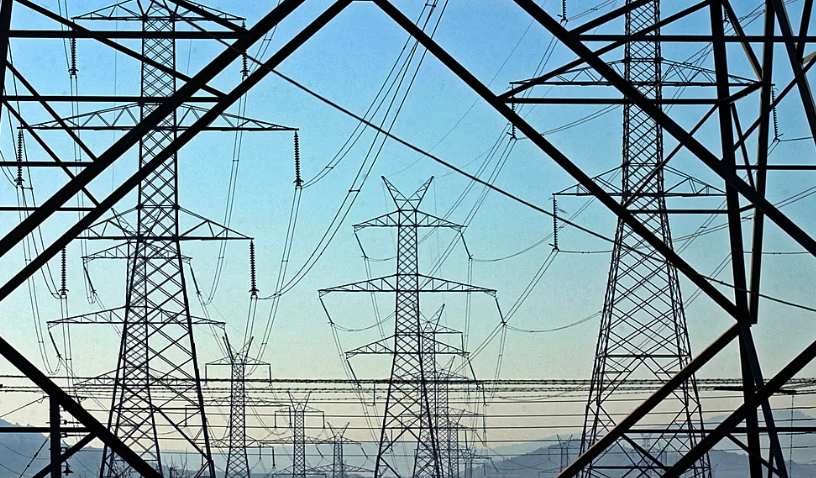
Energy security and affordability have become central to Europe’s political and economic agenda since Russia’s invasion of Ukraine, pushing the European Union to strengthen cross-border energy ties. As the continent works to integrate more renewable power and reduce dependence on fossil fuels, new data reveals striking contrasts in how countries trade electricity.
According to the International Energy Agency (IEA), electricity imports and exports among European OECD nations have risen steadily over the past two decades. Eurostat figures for 2024 show that of 35 European countries, 13 were net exporters of electricity while 21 were net importers. Only Cyprus reported no electricity imports at all.
On average, EU countries exported slightly more electricity than they imported, with “net imports as a percentage of total electricity use” averaging at -0.5 per cent. But the divide between energy-rich exporters and import-dependent economies remains wide.
Sweden led Europe’s exporters with a net export rate of -27 per cent, followed closely by France at -22 per cent. Other strong exporters included Slovenia (-19%), Norway (-14%), Slovakia (-13%), Czechia (-12%), and Austria (-10%). Among Europe’s four largest economies, France and Spain exported more than they imported, while Germany and Italy were on the opposite side of the ledger — with Germany recording a 6 per cent import rate and Italy 18 per cent.
Experts say the gap reflects fundamental differences in energy infrastructure. Countries like Sweden, Norway, and France benefit from extensive hydroelectric or nuclear power capacity, giving them consistent surpluses. In contrast, nations with a high share of intermittent renewables — such as wind or solar — tend to rely on imports when generation dips.
Energy trade patterns can shift sharply year to year. Greece, for instance, moved from being a net importer in 2023 (10%) to a slight exporter in 2024 (-0.6%), while Croatia’s import rate more than doubled over the same period.
Germany’s transition from a long-time electricity exporter to a net importer has drawn particular attention. Rina Bohle Zeller of Agora Energiewende attributed the shift to higher carbon prices, which have made coal generation less competitive, and the closure of three nuclear reactors. At the same time, growing renewable capacity in neighbouring states has increased the flow of cheaper power into Germany.
In absolute terms, Italy was Europe’s largest electricity importer in 2024, with net imports of 51,000 gigawatt-hours (GWh), followed by Germany at 26,269 GWh. France, meanwhile, emerged as the continent’s top exporter — and the world’s largest — with net exports of 89,851 GWh, buoyed by a rebound in nuclear generation and a 10 per cent rise in renewable output.
Experts say such cross-border electricity trade is vital for keeping prices stable and ensuring supply security. “These exchanges make electricity cheaper for households and industry and are the most cost-effective way to guarantee energy security,” said Zeller. “When Germany’s sun sets, Denmark’s wind rises — that’s the strength of an interconnected Europe.”
