


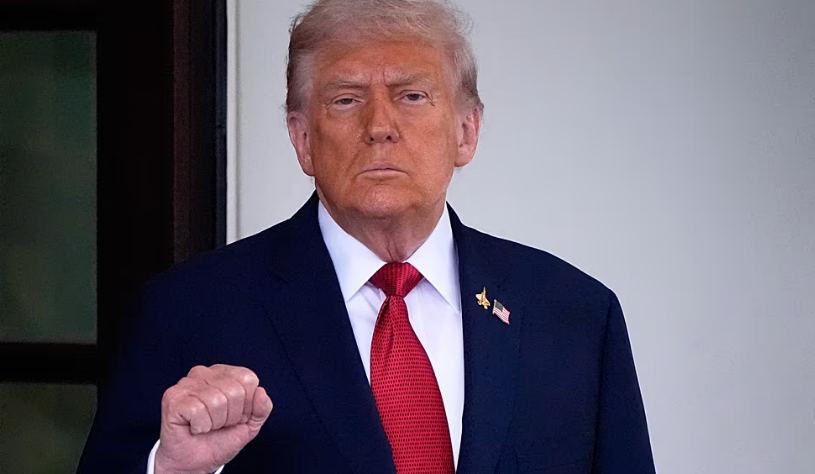
President Donald Trump on Thursday unveiled a sweeping set of new tariffs that could significantly affect household goods, healthcare costs, and the broader U.S. economy. Starting October 1, the administration plans to impose a 100% import tax on pharmaceutical drugs, a 50% duty on kitchen cabinets and bathroom vanities, 30% on upholstered furniture, and 25% on heavy trucks.
The announcement, made through posts on Trump’s Truth Social platform, signals the president’s continued reliance on tariffs as a cornerstone of his economic strategy. Trump argued that the measures are intended to reduce the federal budget deficit and boost domestic manufacturing, but offered limited legal justification. He claimed the tariffs were necessary “for national security and other reasons,” particularly with respect to cabinetry and furniture.
Under the Trade Expansion Act of 1962, the administration has already launched national security investigations into imports of pharmaceutical drugs and heavy trucks. A separate inquiry into timber and lumber began in March, though it remains unclear whether this directly relates to the new furniture tariffs.
Economists warn that the measures could inject more volatility into an economy already grappling with high inflation and slowing job growth. Federal Reserve Chair Jerome Powell recently cautioned that goods prices are driving much of this year’s inflationary pressure. “We have begun to see goods prices showing through into higher inflation,” Powell said, noting that the trend could worsen with additional import costs.
Healthcare groups and trade organizations reacted with alarm to the pharmaceutical announcement. The U.S. imported nearly $233 billion worth of medicines in 2024, according to Census Bureau data. Doubling prices on many of those products could raise costs for patients, Medicare, and Medicaid. Pascal Chan of the Canadian Chamber of Commerce warned of “immediate price hikes, strained insurance systems, hospital shortages, and the real risk of patients rationing or foregoing essential medicines.”
Trump said the pharmaceutical tariffs would not apply to companies building factories in the U.S., describing this as either projects that have broken ground or are under construction. However, it is unclear how the rule would apply to firms already producing in the country.
The president defended tariffs on heavy trucks as a measure to protect U.S. manufacturers such as Peterbilt, Kenworth, Freightliner, and Mack Trucks. “Large Truck Company Manufacturers…will be protected from the onslaught of outside interruptions,” he wrote.
While Trump has insisted tariffs spur investment in U.S. factories, federal data paints a more complex picture. Since April, manufacturers have cut 42,000 jobs, while construction firms have reduced payrolls by 8,000.
The announcement also comes ahead of a Supreme Court review in November over Trump’s use of emergency powers to impose broad tariffs under a 1977 law—a strategy that two lower courts ruled exceeded presidential authority.
Despite signs of economic strain, Trump maintains that his policies are succeeding. “There’s no inflation,” he told reporters Thursday. “We’re having unbelievable success.”
