


Sales of British-made cars to the United States rose in July, reversing three months of decline, following the implementation of a new UK-US tariff agreement.
Figures released by the Society of Motor Manufacturers and Traders (SMMT) show exports climbed 6.8% compared with the previous month, offering some relief to an industry that has struggled with higher costs and global supply chain pressures.
The rebound comes after a turbulent spring for the sector. In April, US President Donald Trump sharply increased import taxes on UK-built cars from 2.5% to 27.5%, a move that rattled manufacturers and forced some brands, including Jaguar Land Rover (JLR), to pause shipments. By May, however, London and Washington had reached a compromise, agreeing to lower the tariff to 10% from the end of June.
SMMT said the July figures demonstrate the importance of the new arrangement. “The US remains the largest single national market for British-built cars, underscoring the importance of the UK-US trade deal,” the association noted. Despite the improvement, it added that UK car production continues to face broader challenges.
Under the terms of the deal, the reduced 10% tariff applies only to the first 100,000 vehicles exported annually to the US — roughly equivalent to the number shipped across the Atlantic last year. Any exports beyond that threshold will still be subject to the original 27.5% duty.
The US accounted for 18.1% of all UK car exports in July, cementing its status as a crucial overseas market. Nonetheless, the European Union remains by far the largest destination, representing 45.6% of exports.
Industry analysts said the agreement has offered carmakers breathing room at a critical moment. “The US is an important market for British-built cars,” said Colleen McHugh, chief investment officer at investment firm Wealthify. “In particular, it is a key market for premium brands like Jaguar Land Rover.”
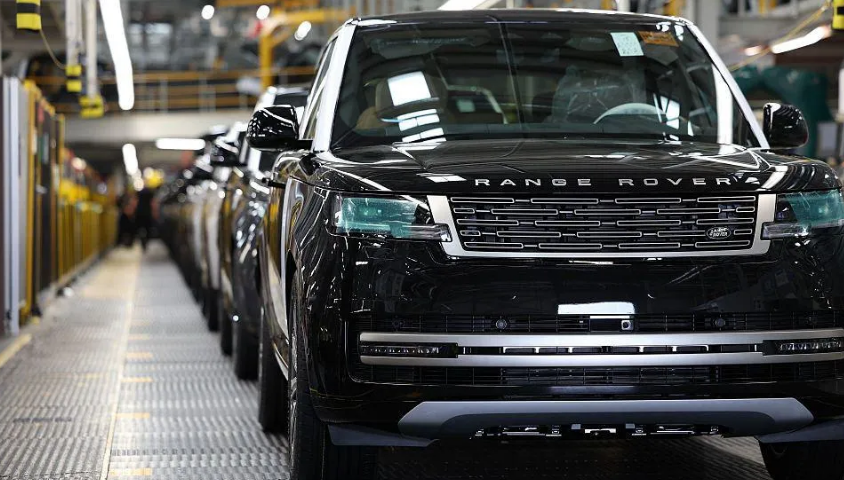
JLR, one of the UK’s largest automotive exporters, halted deliveries to the US in April after the tariff hike but resumed shipments in May once the trade compromise was reached. Analysts say its performance will be closely watched as a bellwether for the sector’s recovery in the US market.
While the tariff relief has boosted short-term sentiment, manufacturers remain wary. With the cap on reduced tariffs in place, companies could face higher costs again if demand for UK cars in the US rises beyond 100,000 units this year.
For now, July’s rebound provides a much-needed lift to the British auto industry, which has faced a challenging mix of trade disputes, supply shortages, and weakening global demand.
