


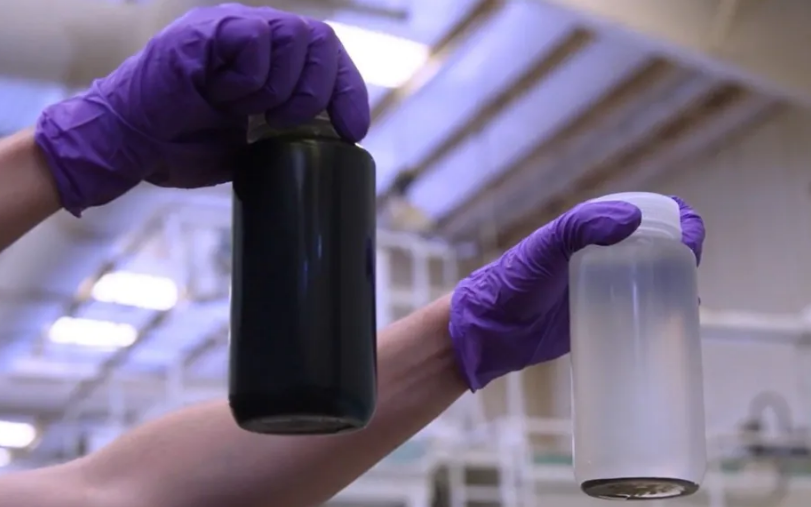
Efforts to tackle the global challenge of per- and polyfluoroalkyl substances (PFAS), commonly known as “forever chemicals,” are accelerating, as new destruction technologies move closer to commercial reality.
PFAS, used in everyday products such as non-stick cookware, waterproof clothing, food packaging, and cosmetics, are valued for their durability but are notorious for their resistance to degradation. Their strong carbon-fluorine bonds allow them to persist in the environment for decades or even centuries, with links to serious health risks including cancers and reproductive problems.
The main dilemma for governments and industry has long been what to do with concentrated PFAS waste once it is removed from water and soil. Traditional disposal methods—incineration, hazardous waste storage, or landfilling—are costly and often incomplete, leading to harmful emissions. Now, clean-tech companies are developing methods to break PFAS down permanently.
Among the most promising is electrochemical oxidation (EO), which uses electrodes and electric current to dismantle PFAS molecules. Canadian start-up Axine Water Technologies has already sold its first commercial-scale EO system to a Michigan auto parts producer after successful pilot testing.
Another contender is supercritical water oxidation (SCWO), which heats and pressurises water to an extreme state that can sever carbon-fluorine bonds. North Carolina-based 374Water is piloting the method with the City of Orlando, Florida, at its largest wastewater plant. Although expensive and complex, SCWO can treat both solid and liquid PFAS waste, including ground-up plastics.
Additional technologies under development include hydrothermal alkaline treatment (HALT), pioneered by Washington-based start-up Aquagga, and plasma-based methods that use ionised gas to break down chemicals. Each offers potential advantages, though scientists caution that byproducts such as hydrogen fluoride must be carefully managed.
Legal and regulatory pressure is fuelling innovation. Thousands of lawsuits have already been filed in the US, with chemical giants such as 3M facing billions in settlements. In parallel, regulations are tightening worldwide. The US will impose legal limits on two PFAS in drinking water from 2031, while the European Union will begin enforcement of its own limits next year.
Military contamination is another driver. PFAS-laden firefighting foams used for decades at US military sites have left behind widespread pollution, with more than 700 sites suspected of contamination. The Department of Defence is now working with technology firms to test scalable solutions.
Industry demand is expected to rise as new sectors, including semiconductor manufacturing, face scrutiny for heavy PFAS use. “There’s a lot of destruction that needs to be done,” said Parker Bovée of Cleantech Group, noting that PFAS destruction technologies are fast becoming a “large and growing” global market.
For now, most projects remain in pilot stages, but experts predict that within a few years, commercial-scale facilities could be widespread—turning the tide on one of the world’s most persistent pollutants.
