


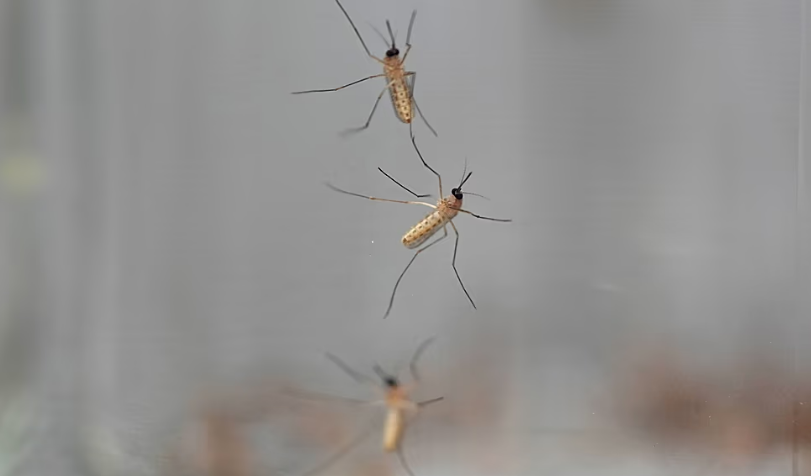
Hundreds of mosquito-borne infections have been reported across Europe this summer, with health authorities warning that warmer temperatures and global travel are accelerating the spread of diseases once considered rare in the region.
According to the European Centre for Disease Prevention and Control (ECDC), nearly 470 cases of West Nile virus, chikungunya, and dengue have been confirmed or suspected so far this year in EU member states and neighbouring countries. The figure highlights growing concerns that climate change is creating conditions for mosquito populations to expand further north, making seasonal outbreaks increasingly common.
West Nile Virus Leads Case Numbers
The majority of infections this year have been linked to West Nile virus, which has been detected in eight European countries. Italy remains the hardest hit, with 274 reported cases and at least 10 deaths, mostly among men aged 65 and older. Other countries reporting infections include Greece (35 cases), Serbia (nine), Romania (six), France (four), Hungary (two), Spain (one) and Bulgaria (one).
The World Health Organization (WHO) notes that while most West Nile virus infections are mild, about one in 150 cases can result in severe neurological complications such as encephalitis or meningitis, which can prove fatal. Hospitalisations have been common among this year’s patients.
Chikungunya Clusters in France
France has seen a spike in chikungunya cases, with 111 infections recorded this summer, including 22 distinct clusters of transmission—16 of which remain active. Italy has also reported seven cases.
Chikungunya, which is not endemic to mainland Europe, typically spreads more easily during the hot summer months. The illness, marked by fever, rash, muscle pain, and debilitating joint pain, is rarely fatal but can cause prolonged discomfort. Two vaccines are approved in the EU, though no specific treatments exist.
Dengue Reports in Several Countries
Authorities are also tracking dengue cases, with 11 reported in France, four in Italy, and two in Portugal. The Portuguese infections, identified in Madeira in January, are believed to have been contracted in 2024.
The ECDC has warned that Aedes mosquitoes—responsible for spreading dengue—are now established across much of Europe, with particular concentrations in Madeira, Cyprus, and the Black Sea region. Globally, dengue infects between 100 million and 400 million people annually, according to WHO estimates.
Public Health Warning
Health experts stress that while the risk to the general population remains low, outbreaks are expected to become more frequent. Preventive measures such as avoiding standing water, using insect repellent, and wearing protective clothing remain the best defence against infection.
With record-high summer temperatures sweeping across southern Europe, authorities are urging vigilance, noting that mosquito-borne diseases are no longer confined to tropical regions but are increasingly a seasonal public health challenge in Europe.
