


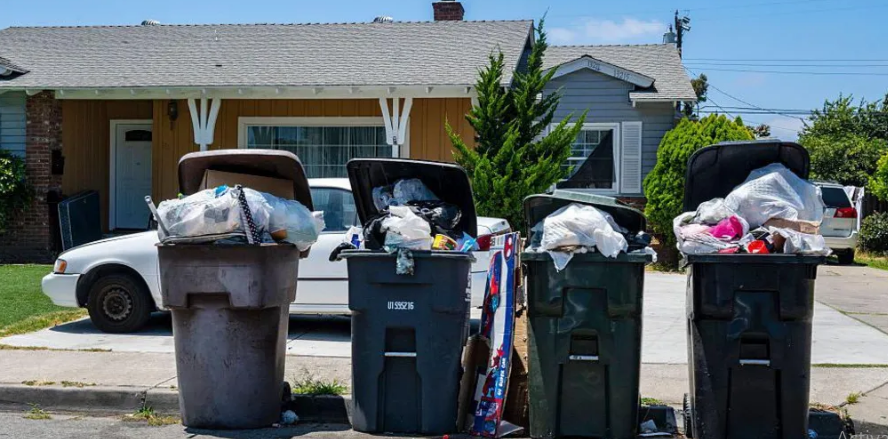
Overflowing dumpsters, swarming flies, and foul odors have become an increasingly common sight across American cities this summer, as a nationwide garbage strike by employees of Republic Services nears its fourth week.
The strike, which began on July 1 with Teamsters Local 25 in Massachusetts, has since spread to cities in California, Illinois, Georgia, and Washington. Workers allege low pay and poor benefits compared to their counterparts in other waste companies, while Republic Services, one of the country’s largest private waste management firms, accuses the union of refusing to compromise.
At its peak, over 2,000 workers walked off the job, disrupting waste collection for millions of Americans. While some local disputes have been resolved—including in Lacey, Washington and Manteca, California—others remain deadlocked. Talks between Republic and Local 25 have stalled, with no return to the bargaining table scheduled.
“The cost of living is high – what they’re offering, I wouldn’t be able to live on that in a month,” said Mike Ortiz, a truck driver from Malden, Massachusetts with 17 years of industry experience.
In the coastal town of Gloucester, Massachusetts, city officials have sued Republic Services for breach of contract, claiming the company failed to meet its obligations after assuring municipalities it could maintain uninterrupted service.
“We were promised full coverage, but from day one that just hasn’t happened,” said Gloucester Mayor Greg Vargas.
Republic Services, which reported $16 billion in revenue in 2024, has fired back with its own legal action, accusing the Teamsters of illegal activity including vandalism and threats—allegations the union denies.
In cities like Boston, where Republic handles commercial waste for businesses, officials are considering penalties. Mayor Michelle Wu warned the company that continued failure to fulfill contracts could result in fines.
Some towns have resorted to emergency measures, setting up public drop-off sites for household trash or reassigning municipal workers to collection duty. Others have scrambled to find alternative contractors, incurring unexpected costs now cited in lawsuits.
Beyond the legal battles, the strike is taking a toll on daily life. Business owners like Glaicy Santos in Malden report health hazards and customer complaints due to uncollected trash.
“It’s been horrible. When trash piles up, it attracts mosquitoes and rodents,” she said.
Workers insist the strike is about more than pay. In Lacey, Washington, sanitation worker Eric Fiel described unsafe and unsanitary conditions at the company’s facility, where malfunctioning equipment leaves employees “wading through water full of feces and diapers.”
Though solidarity has helped some local unions secure better contracts, many remain at an impasse. And as the summer heat intensifies, so too does public frustration with the growing mounds of garbage.
