


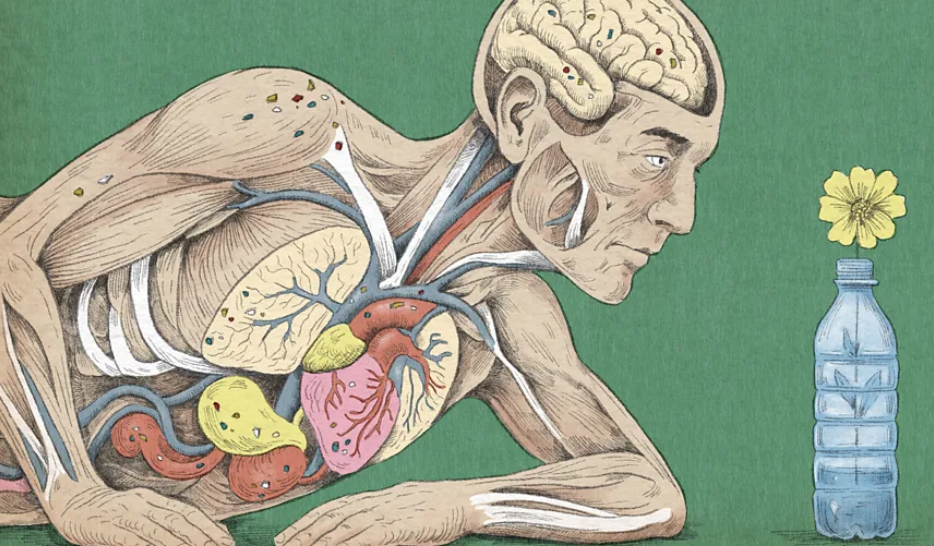
Microplastics, the tiny fragments of plastic pollution found nearly everywhere on Earth, are now being discovered inside the human body – including in bones, vital organs, and even the brain – raising growing concern among scientists about their long-term health effects.
Once considered an environmental nuisance, microplastics have increasingly been detected in human blood, lungs, liver, kidneys, and breast milk. Most recently, studies have found traces embedded in skeletal muscle and bone tissue. These discoveries are prompting urgent questions about how this pollution may be silently harming our health.
A historic archive of soil samples at Rothamsted Research in Hertfordshire, dating back to 1843, offers a striking timeline of pollution. Collected from one of the world’s longest-running agricultural experiments, the samples show a sharp rise in microplastic contamination from the mid-20th century onwards — coinciding with mass plastic production.
“Microplastics became detectable in our archive starting around the 1960s,” said Andy Macdonald, Rothamsted’s “Keeper of the Bottles.” “They’ve likely entered soils through air, water, and mechanical sources like tractor tires.”
Globally, people now ingest or inhale thousands of microplastic particles each year — from bottled water, tea bags dipped in hot water, to food heated in plastic containers. But what these plastics are doing inside our bodies remains a mystery.
To investigate, researchers at Imperial College London launched the world’s first human “challenge trial” involving microplastics. In early 2025, eight volunteers consumed liquids containing plastic particles under carefully controlled lab conditions. Researchers monitored their blood over 10 hours to track plastic absorption, aiming to quantify what enters the bloodstream — and stays there.
Stephanie Wright, who led the study, says that heating plastics in food or drink preparation releases more particles than previously thought. “We want to know where these microplastics go inside the body, how much is absorbed, and if they accumulate in organs.”
Evidence is already mounting. A study published in February found that dementia patients had up to 10 times more plastic in their brains than non-dementia subjects. Others found microplastics in carotid artery plaques linked to cardiovascular disease, and in muscles and bones of surgery patients in China.
While scientists stop short of declaring microplastics a direct cause of diseases like dementia or heart failure, many believe they act as a contributing factor. “They’re unlikely to be a single cause,” said Prof. Fay Couceiro of the University of Portsmouth. “But they add stress to the body’s systems over time.”
The term “microplastic” itself is broad — covering thousands of types of plastic and chemical compositions. Some may carry environmental toxins or heavy metals, while others interact with the body’s hormone systems or immune cells. Nanoplastics, which are even smaller, can cross cellular membranes and pose a more serious threat.
With growing evidence pointing toward chronic inflammation, accelerated aging, and possibly increased cancer risk, researchers are calling for urgent action to better understand and regulate plastic exposure.
“Microplastics are not just an environmental issue anymore,” warned Raffaele Marfella, professor of internal medicine at the University of Campania in Naples. “They’re an invisible threat that may be shaping the future of human health.”
