


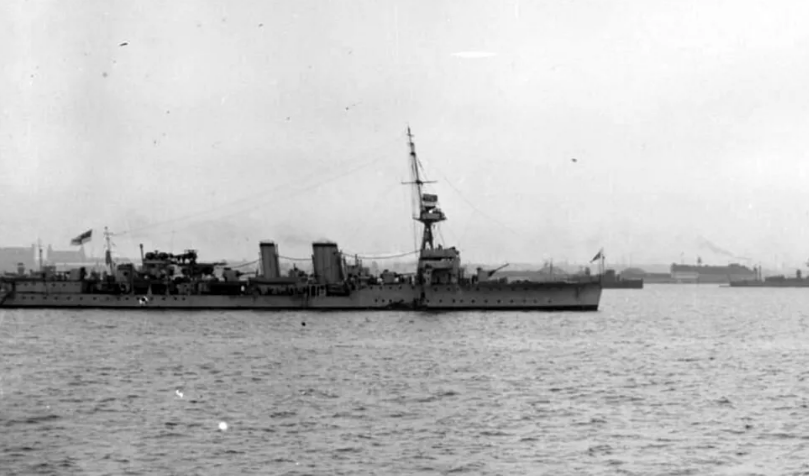
Over a century after it sank in the Baltic Sea, the Royal Navy cruiser HMS Cassandra has become the focus of urgent environmental concern, highlighting a global challenge posed by thousands of rusting wartime shipwrecks leaking toxic pollutants into marine ecosystems.
The HMS Cassandra, which sank in 1918 after hitting a mine off Estonia’s Saaremaa Island, still contains a significant amount of oil. Discovered only in 2010, the wreck sits 100 metres underwater and remains in “exceptionally preserved” condition, according to Matt Skelhorn of the UK Ministry of Defence (MOD), who is leading the current survey effort. Its well-preserved structure raises the likelihood that large volumes of oil remain trapped inside.
Though the vessel is not at immediate risk of collapse, oil is already seeping into surrounding waters, prompting concern among environmentalists and defence officials alike. “Our goal is to assess the state of the wreck so we can proactively manage it before a catastrophic leak occurs,” said Harriet Rushton, environmental manager for the UK’s Defence Equipment and Support (DE&S) unit.
This collaborative mission between the UK and Estonian governments is seen as a model for addressing the wider issue of “potentially polluting wrecks” (PPWs), a category encompassing around 8,500 known sunken vessels worldwide—mostly casualties of the First and Second World Wars.
The environmental risk is growing as climate change accelerates the corrosion of underwater wrecks. Rising sea temperatures, ocean acidification, and intensified storms are placing additional stress on aging hulls, many of which still contain fuel or munitions. Human activities like deep-sea mining and trawling further compound the threat.
The urgency of the issue was brought to the forefront at the UN Ocean Conference in Nice earlier this month, where the international coalition Project Tangaroa released The Malta Manifesto. The document outlines seven calls to action for governments and industry stakeholders, including the creation of an international finance task force and the development of shared data platforms.
“There’s a real risk these ticking time bombs could explode—environmentally, not literally—because we lack the legal and financial frameworks to act fast,” said Lydia Woolley, Project Tangaroa programme manager.
Many PPWs are still owned by their original flag states—such as the US, UK, Germany, and Japan—which retain sovereign rights over the wrecks. This legal complexity means local governments cannot unilaterally intervene, even in their own waters, without the consent of the wreck’s country of origin.
The 2007 IMO Wreck Removal Convention and the International Oil Pollution Compensation Fund provide some guidance, but both exclude legacy war wrecks. Without global consensus and coordinated action, many experts fear coastal nations—often under-resourced—will be left to bear the brunt of any disasters.
“Our message is not fatalistic,” Woolley said. “We know how to manage these risks. What’s needed now is international cooperation, shared data, and urgent investment in solutions before these wrecks do irreversible damage.”
