


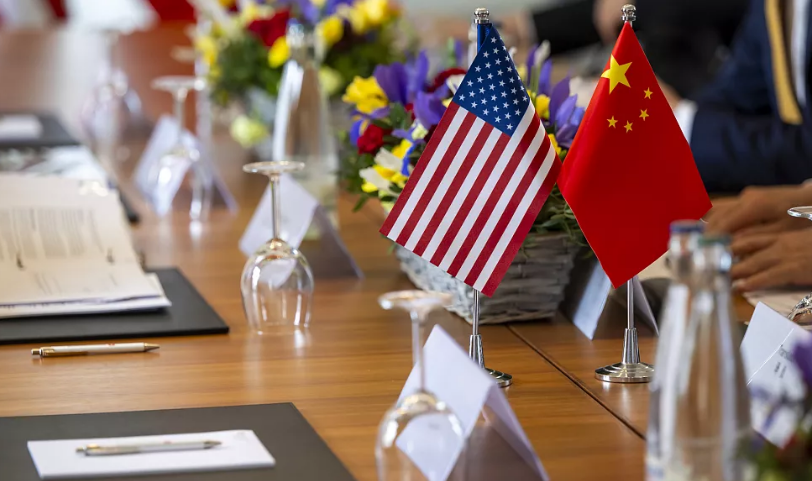
China and the United States have signed a new trade agreement, signaling a major step toward easing tensions between the world’s two largest economies after years of escalating disputes and tariff threats.
China’s Ministry of Commerce confirmed the deal on Friday, stating that the agreement includes a framework covering various trade aspects, notably the export of rare earth minerals — critical components in high-tech industries including electric vehicles, robotics, and renewable energy.
According to a statement released by the Chinese government, Beijing will continue to approve export permits for controlled materials, while Washington has agreed to cancel “a series of restrictive measures” previously imposed on China.
The announcement followed remarks by U.S. President Donald Trump, who told reporters late Thursday, “We just signed with China yesterday,” though he did not provide specific details. The agreement is the result of months of negotiations, beginning with initial talks in Geneva in May and followed by a second round in London, which laid the groundwork for the finalized deal.
Rare earths — 17 elements vital to many advanced technologies — have emerged as a key battleground in the US-China trade relationship. In April, China imposed new licensing requirements on seven of these materials, raising alarms in Western industries reliant on their stable supply. On Thursday, Beijing said it had accelerated the approval process for export licenses and had already approved a number of applications.
With rare earth controls becoming more influential than tariffs in recent negotiations, the deal marks a shift in the trade war’s dynamics. While many tariffs are expected to be eased under the new agreement, some—including U.S. duties on steel, aluminum, and fentanyl-related trade—remain in effect.
The prolonged trade tensions have already taken a toll on both economies. In the United States, GDP contracted at an annualized rate of 0.5% in the first quarter, partially due to businesses stockpiling imports ahead of expected tariffs. In China, industrial profits fell more than 9% year-on-year in May, with automakers bearing much of the burden.
Despite the economic headwinds, U.S. officials, including President Trump, remain optimistic about future trade arrangements. “We’re going to have deal after deal after deal,” said U.S. business leader Howard Lutnick, signaling continued momentum in American trade diplomacy, with India and other partners potentially next in line.
