


Europe is stepping up efforts to reduce its dependence on foreign payment networks as governments and financial institutions increasingly view payment infrastructure as a matter of economic and strategic security.
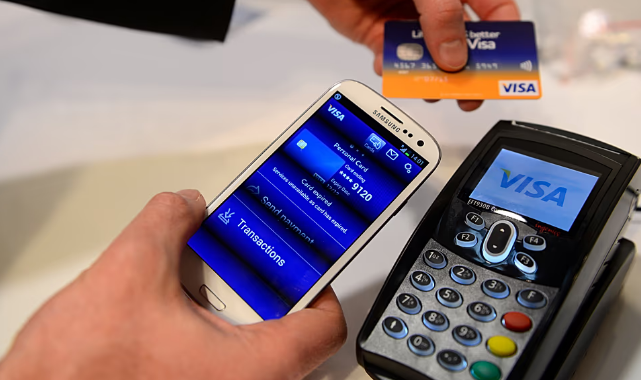
Visa and Mastercard, both US-based companies, process a large share of card payments across Europe. According to European Central Bank data, the two networks account for about 61 percent of card payments in the euro area and handle almost all cross-border card transactions.
European officials argue that this dependence could leave the region vulnerable to political pressure or disruptions during periods of geopolitical tension. The experience of Russia, where Visa and Mastercard suspended operations following Western sanctions, has reinforced concerns about relying heavily on foreign-controlled financial infrastructure.
The issue is one of the reasons the European Central Bank is backing the digital euro. The proposed electronic currency would be issued and guaranteed by the ECB and designed to operate alongside cash and existing banking services.
The digital euro is expected to support both online and offline payments, with commercial banks and payment providers serving customers while the ECB provides the underlying infrastructure. Supporters say the system could give European consumers and businesses a payment option based on European technology while reducing transaction costs for merchants.
Negotiations between the European Parliament and EU member states are entering their final stage, with approval targeted for the end of the year. A pilot programme involving 36 payment service providers is planned for 2027, while retail use could begin in 2029.
ECB President Christine Lagarde has said Europe needs its own payment solution to strengthen economic sovereignty and reduce dependence on foreign networks.
Private initiatives are also seeking to create a stronger European payments market. The European Payments Alliance and European Payments Initiative have agreed to connect instant payment systems used across several countries. The combined network could eventually reach around 380 million people in 15 European countries.
The goal is to allow consumers to make cross-border payments through their existing banking or payment applications without needing to switch platforms.
Similar efforts are under way elsewhere. In the UK, major banks including Barclays, NatWest, Lloyds and HSBC are supporting an initiative designed to expand account-to-account payments and reduce dependence on Visa and Mastercard.
Brazil has already developed a widely used domestic alternative through PIX, the instant payment system created by its central bank. PIX now accounts for more than half of transactions in the country and has become a symbol of Brazil’s payment independence.
Other countries are developing comparable systems. Colombia’s Bre-B instant payment network has rapidly gained users, while companies such as Brazilian fintech PagBrasil are working on systems that connect national payment platforms.
PagBrasil’s RoamingPay allows consumers to make QR-code payments abroad through their domestic banking apps or digital wallets.
The growing number of national payment systems has created a new challenge: interoperability. Industry experts argue that linking these systems could allow consumers to retain their domestic payment services while using them abroad, similar to mobile phone roaming.
For Europe, the debate is therefore moving beyond simply creating a homegrown payment system. The larger challenge is building networks that can operate across borders without leaving European consumers dependent on foreign card companies when they travel or conduct international business.
