


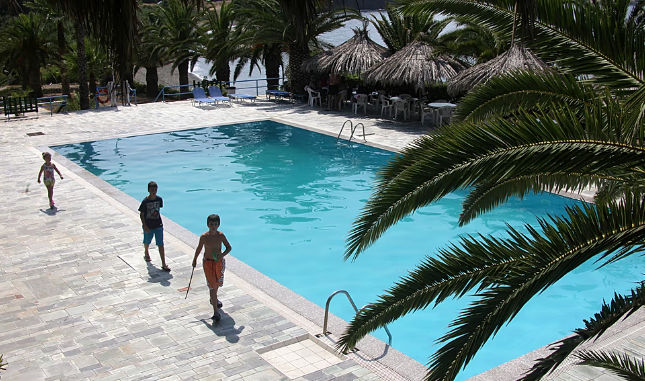
Doctors and water safety experts are urging parents and carers to take extra precautions around swimming pools, beaches and other bodies of water after a child drowned in a swimming pool on the Greek island of Paros.
Experts say drowning can happen within seconds and may occur without shouting or obvious signs of distress. They stress that constant supervision, safe swimming locations and basic water skills can significantly reduce the danger.
The most important rule for parents is to keep children under close and continuous supervision. An adult should focus entirely on watching the child rather than using a phone, reading or becoming involved in other activities. Children under five should remain close enough for an adult to intervene immediately.
Children should never be left alone in the water, even for a few moments. Having an older sibling nearby does not replace adult supervision. Armbands and inflatable toys also should not be treated as safety equipment. For boating and water sports, children should wear properly fitted, certified lifejackets.
The Hellenic Red Cross recommends using organised beaches with lifeguards and following warning flags and instructions. Swimmers should avoid strong currents and waves and remain within a safe distance from shore. Anyone caught in a current should stay calm and swim parallel to the shoreline until clear of it.
Diving into unfamiliar water is another major risk. Swimmers should avoid diving where the depth is unknown or where rocks, piers or other obstacles may be present.
Swimming pools require similar precautions. Experts recommend controlled access, suitable fencing and self-closing gates to prevent children from entering without an adult. Pool toys should be removed when the pool is not being used so they do not attract children.
Learning to swim can reduce risk by giving children basic water skills, but it does not make them immune to drowning. Fatigue, currents, panic and unexpected conditions can place even strong swimmers in danger.
The Red Cross also advises swimmers to avoid entering the water immediately after eating or drinking alcohol and to enter cold water gradually. Safe Water Sports recommends checking pool depth, avoiding running or pushing near pools and ensuring children are supervised by adults.
Parents and carers are also encouraged to learn cardiopulmonary resuscitation. In a serious water emergency, emergency services should be contacted immediately and anyone trained in CPR should provide assistance according to their training.
The Hellenic Red Cross said drowning remains a major public safety concern in Greece. Recent data from the country’s public health authorities indicate an average of 378 drowning deaths annually over the past five years, with most occurring at sea.
Experts warn against several common misconceptions, including the belief that drowning is always noisy, that swimming ability removes the need for supervision, or that having several adults nearby guarantees that someone is watching a child.
Their message is straightforward: children need a responsible adult watching them closely whenever they are near water. Careful supervision and basic safety measures can help families enjoy the summer while reducing the risk of tragedy.
