


Ireland’s six-month presidency of the Council of the European Union has begun under unexpected pressure after renewed criticism over continued alumina exports from an Irish refinery to Russia, raising questions about Dublin’s commitment to supporting Ukraine while maintaining trade linked to a key industrial material.
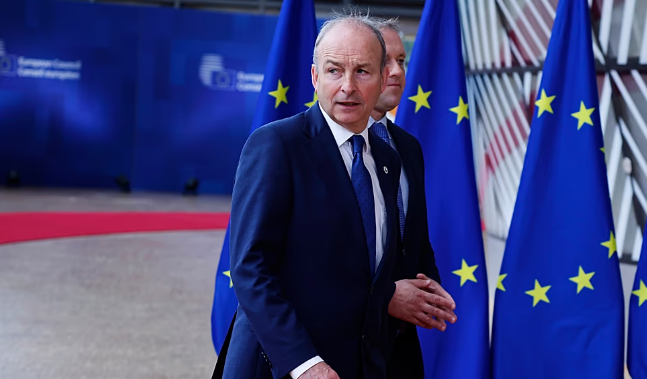
The controversy has overshadowed what was intended to be a milestone for Ireland as it assumes the rotating EU presidency for the eighth time. Speaking at the opening ceremony at Dublin Castle, Taoiseach Micheál Martin described the role as both an honour and a responsibility, saying Ireland was prepared to fully embrace its duties during the presidency.
The focus quickly shifted, however, after Ukrainian President Volodymyr Zelenskyy publicly criticised Ireland during the ceremony, arguing that alumina exported from Ireland could ultimately support Russia’s military industry.
Alumina is the primary raw material used to produce aluminium, which has a wide range of industrial and military applications. The criticism follows reports published earlier this year detailing commercial ties between Aughinish Alumina, Europe’s largest alumina refinery located in western Ireland, and Russia.
“Every tonne of raw materials that ends up in Russia is used against us in this war,” Zelenskyy said during the ceremony, urging Ireland to act swiftly.
Martin responded by saying his government had launched an investigation into the exports and promised that its findings would be shared with the European Commission once completed. He stressed that Ireland does not want products originating from the country to contribute to Russia’s war effort.
The Taoiseach also noted that alumina has not been included in any European Union sanctions package against Russia. European Commission President Ursula von der Leyen said it was Ireland’s responsibility to complete the investigation and determine the appropriate timetable.
The issue presents a difficult challenge for Dublin at a time when one of its main responsibilities as EU Council president will be guiding negotiations on further sanctions against Russia.
Deputy Prime Minister Simon Harris said Ireland would continue to apply EU sanctions consistently rather than selecting individual measures based on national interests. He added that establishing all the facts remained essential before any decisions were made.
Any future sanctions on alumina could have significant consequences for Aughinish Alumina, which reportedly sends about half of its alumina exports to Russia. The company has warned that restrictions could affect employment, environmental operations and Europe’s aluminium supply chain. It has also raised the possibility of nationalisation if exports were prohibited, although the Irish government has rejected such proposals.
The controversy has intensified after Swedish authorities concluded that Aughinish’s parent company, Rusal, remains effectively controlled by sanctioned Russian businessman Oleg Deripaska.
With Ireland’s investigation nearing completion, its findings are expected to shape the next phase of the dispute as the government seeks to balance its support for Ukraine with economic and industrial considerations during its presidency of the European Union.
