


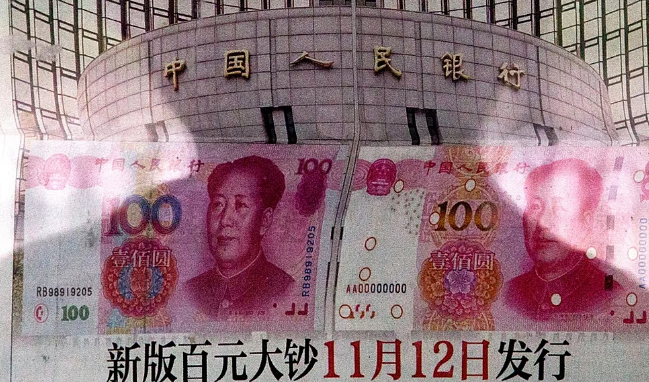
European Union leaders are increasingly raising concerns over what they describe as the undervaluation of China’s currency, arguing it is contributing to the bloc’s widening trade imbalance with Beijing. The issue has gained urgency as the EU’s trade deficit with China reaches record levels, intensifying pressure on policymakers to respond.
German Chancellor Friedrich Merz said after the European Council summit on 19 June that an “artificially low currency is an advantage for those who want to improve their economic competition positions,” reflecting growing frustration among European capitals over China’s trade practices. The matter was also discussed at last week’s G7 summit in France, where economic imbalances and global competitiveness featured prominently.
The EU’s deficit with China reached €359.9 billion in 2025, marking the first time all member states recorded a trade deficit with Beijing, including Germany, Europe’s largest economy. European Commission President Ursula von der Leyen called the situation “simply not sustainable,” signalling that Brussels is preparing additional measures to address the gap.
A report by the French advisory body Haut Commissariat à la Stratégie au Plan estimates that the yuan is undervalued by around 20–25%. It argues that this currency gap helps make Chinese goods significantly more competitive on European markets, with EU industry estimates suggesting imported products can be 30–40% cheaper than European equivalents.
The report notes that while there is no single agreed method to measure currency misalignment, the view that the renminbi is significantly undervalued is widely shared among international institutions.
However, analysts caution that the situation is more complex. Alicia Ferro Herrera, an economist at the Brussels-based think tank Bruegel, said China’s currency dynamics are not solely driven by central bank intervention. She explained that large portions of export revenues are held offshore, particularly in Hong Kong, and are not fully converted into renminbi, limiting upward pressure on the currency.
She also argued that Europe’s own inflation gap since the war in Ukraine has played a major role in weakening its competitiveness, suggesting it may account for a significant share of the trade imbalance.
Despite differing interpretations, political momentum is building in Europe for engagement with Beijing on the issue. Merz has proposed initiating dialogue with China on currency coordination, referencing historical agreements such as the 1985 Plaza Accord, where major economies jointly adjusted exchange rates to address global imbalances. He also pointed to the European Monetary System, which once used exchange-rate bands to stabilise intra-European currencies.
At the same time, some economists argue the EU should focus on monitoring sector-specific export pricing from China to detect signs of overcapacity, rather than relying solely on currency diplomacy. They warn that persistent negative pricing trends could signal deeper structural issues in global manufacturing trade flows.
