


Apple has introduced a major artificial intelligence upgrade to its voice assistant Siri at its annual Worldwide Developers Conference, as the company faces continued scrutiny over its pace in the global AI race.
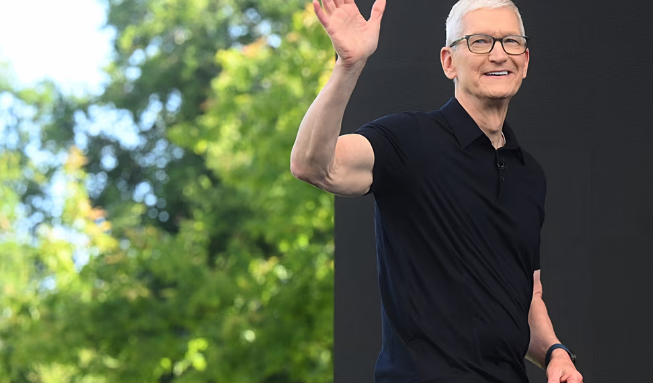
The announcement marked one of the most closely watched moments of the event, coming at a time when rivals such as Google and OpenAI have already rolled out advanced generative AI tools. It also coincided with what is expected to be CEO Tim Cook’s final WWDC appearance before he steps down in September.
Cook received a standing ovation from attendees and described his time leading Apple as “the honour of a lifetime,” adding that the “energy around Apple platforms has never been stronger.”
The centrepiece of Apple’s presentation was Siri AI, a redesigned version of its long-standing assistant. The upgraded system will be integrated across Apple devices and is designed to analyse on-screen content and draw on data from a user’s connected devices to provide more personalised responses.
Apple said the assistant will be capable of performing more complex tasks, such as compiling information from messages, apps and the web. In one example, Siri AI can help plan an event by generating menus, collecting recipes, and inviting contacts from group chats.
The system will also feature visual intelligence capabilities, allowing users to point their camera at objects for real-time information, such as nutritional details of food or compatibility checks for products viewed on screen.
Apple emphasised that privacy remains central to its AI strategy. Craig Federighi, the company’s software chief, said Apple was focused on building “truly helpful AI” that serves users directly, rather than developing tools for novelty or demonstration purposes.
He also suggested that some competitors were pursuing artificial intelligence “for the sake of AI,” while Apple aims to embed it more seamlessly into everyday tools and services.
The company confirmed that Siri AI will launch in beta later this year and will also be available as a standalone application. However, initial rollout will exclude Europe and China due to ongoing regulatory considerations.
Apple is also expanding its AI-powered photo editing tools, including features that allow users to reframe images after capture, effectively simulating changes in camera position.
The update comes as Apple works to close the gap with competitors who have already integrated generative AI into widely used consumer platforms. Analysts have noted that the company has faced delays in delivering previously announced AI features.
The conference also carried added significance due to Apple’s leadership transition. Tim Cook, who has led the company for 15 years, announced his retirement in April after overseeing a period in which Apple’s market value increased by more than $4 trillion.
Cook’s successor, John Ternus, who currently leads Apple’s hardware engineering division, is expected to take over in September. Ternus did not appear on stage during the event.
The leadership change and AI rollout together signal a pivotal moment for Apple as it attempts to reposition itself in a rapidly evolving technology landscape increasingly shaped by artificial intelligence.
