


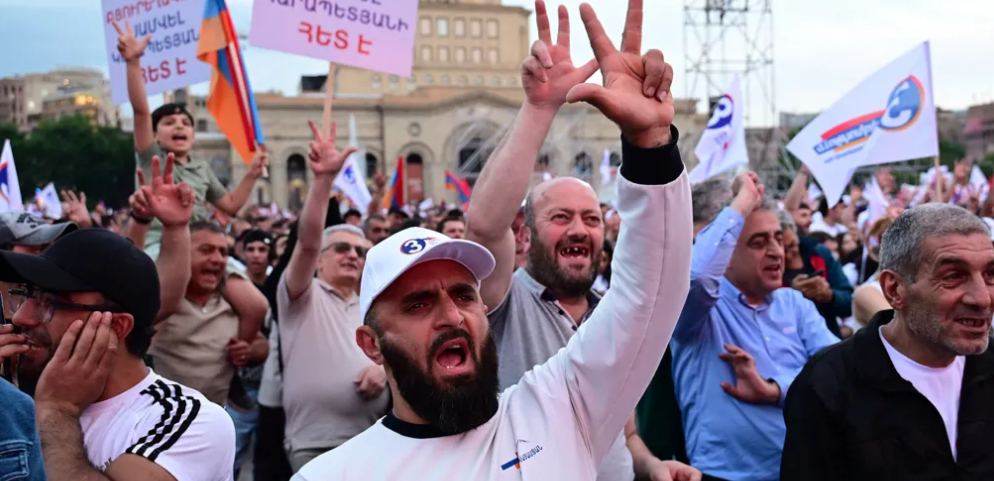
Armenia is holding a closely watched election that could determine whether the South Caucasus nation continues its gradual shift toward the West or reaffirms its long-standing alignment with Russia.
The vote comes at a moment of heightened geopolitical tension, with Prime Minister Nikol Pashinyan seeking re-election on a platform centred on European integration and political reform. The small nation of around three million people has been navigating competing pressures from Moscow and Western partners while managing economic and security challenges in the region.
Since taking office in 2018, Pashinyan has overseen a series of foreign policy changes aimed at reducing Armenia’s dependence on Russia. His government has passed legislation initiating steps toward European Union membership and supported a US-brokered peace process with neighbouring Azerbaijan. That diplomatic effort earned backing from US President Donald Trump and included a high-profile summit in Yerevan with European leaders and Ukrainian President Volodymyr Zelensky earlier this year.
However, domestic divisions remain sharp, particularly following Armenia’s loss of the Nagorno-Karabakh region in 2023, when Azerbaijan took control of the disputed enclave. The outcome displaced tens of thousands of ethnic Armenians and continues to shape political debate. Critics accuse Pashinyan of making concessions to Azerbaijan and failing to secure the release of former separatist leaders now held in Azerbaijani custody.
Opposition forces argue that closer ties with Russia remain essential for Armenia’s security. Former presidents Robert Kocharyan and Serzh Sargsyan, along with allied political groups, have called for a return to stronger military and economic cooperation with Moscow. Billionaire businessman Samvel Karapetyan, currently under house arrest on allegations of plotting against the government, is also part of the broader opposition landscape through his representatives.
Polling suggests a fragmented political field. Surveys indicate Pashinyan’s Civil Contract party leads with around 32 percent support, while a significant share of voters remain undecided or distrustful of all major political figures. Analysts say opposition parties could challenge the incumbent if unified, but internal divisions weaken their position.
Meanwhile, Russia continues to exert influence through economic pressure. Moscow has highlighted Armenia’s reliance on trade and energy ties, warning of consequences if Yerevan deepens relations with the European Union. In recent weeks, Russia imposed restrictions on Armenian agricultural exports, including fruit, vegetables, flowers and bottled water. Armenia still depends on Russia for a significant portion of its trade and receives discounted energy supplies.
Despite this, Armenia has diversified its defence procurement away from Moscow, with most military imports now sourced from countries including India, France and China. Officials say Russia’s remaining leverage lies largely in economic ties, particularly energy pricing and trade access.
As voting continues, the outcome is expected to shape Armenia’s strategic direction, balancing its historical ties with Russia against growing engagement with European institutions and Western partners.
