


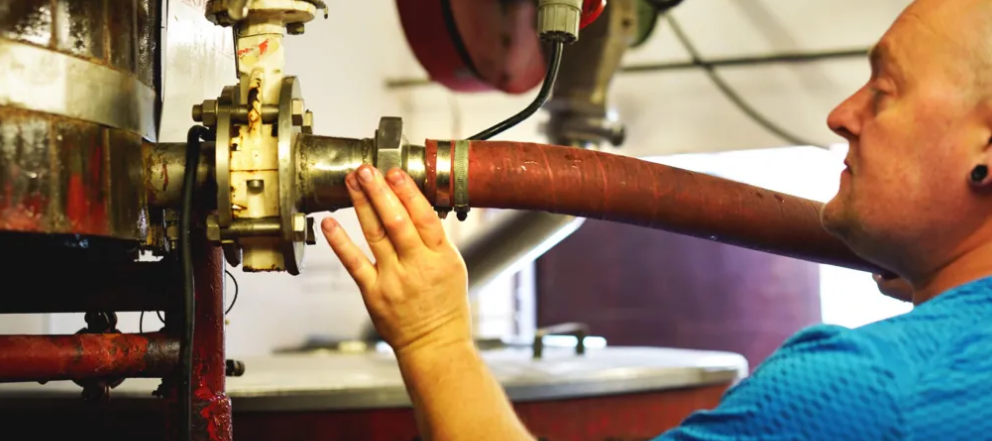
Once at the centre of Britain’s beer industry, Burton-upon-Trent is now a town where the scent of brewing is far less common than it once was.
Al Wall, head brewer at one of the town’s last remaining independent breweries, recalls a time when the aroma of malt and hops drifted through the streets throughout the day. Three decades ago, Burton was home to more than 30 breweries and produced around a quarter of all beer brewed in the UK. Today, only a handful remain.
The decline in Burton reflects a wider contraction across the UK brewing industry. Companies House data shows 320 brewing-related businesses closed last year, while only 170 new ones opened, leaving a net loss of 150. Industry figures also suggest that around two pubs have been closing each day in early 2026.
The number of brewing companies in the UK has fallen to 2,320, down from a peak of 2,594 in 2022. England, which still dominates the sector, has dropped below 2,000 breweries for the first time since 2018. Of those remaining, nearly 100 are currently in administration, insolvency or liquidation.
Tim Webb of the Campaign for Real Ale (CAMRA) said access to market remains a major challenge for smaller producers. He pointed to the dominance of large brewing groups controlling pub distribution lines, making it difficult for independent breweries to compete. Price pressure from supermarkets also limits opportunities for craft brewers to expand.
While some closures are linked to the long-term impact of the pandemic, changing consumer habits have also reshaped demand. Beer consumption in the UK has fallen significantly compared with the early 1990s, when breweries such as Hook Norton were producing far higher volumes.
James Clarke, representing the fifth generation of his family at Hook Norton Brewery, said the industry has undergone a major transformation in both consumption and lifestyle. The company now produces half the volume it did 15 years ago but offers a wider range of beers, reflecting shifting tastes and a growing interest in traditional and craft styles.
Industry leaders say diversification has become essential for survival. Many independent breweries have opened taprooms, visitor centres and on-site experiences to reach customers directly. Andy Slee, chief executive of the Society of Independent Brewers and Associates, said adaptability is now critical, as the traditional beer market continues to shrink while niche and craft segments remain more resilient.
Slee also highlighted the financial pressures facing the sector, pointing to what he described as heavy taxation and rising operational costs. He warned that brewery closures often have wider consequences for local communities, affecting employment and social spaces.
In Burton, Wall and Burton Bridge Brewery manager Emma Cole continue to operate with a focus on independence and heritage. They rely heavily on direct sales through their taproom, as many traditional pub outlets are no longer accessible.
Despite the challenges, Cole said there is still hope for the industry’s future, as long as small breweries can continue to operate and preserve Britain’s brewing traditions.
