


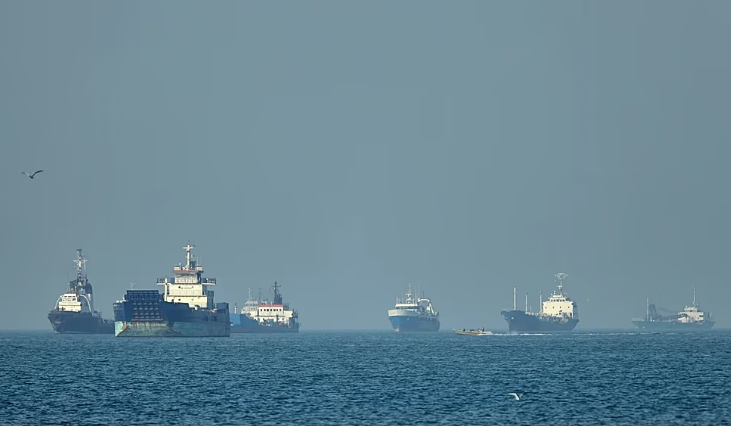
The United States has suspended its newly launched operation to escort commercial shipping through the Strait of Hormuz, just one day after it began, as President Donald Trump signalled renewed optimism over a possible diplomatic breakthrough with Iran.
Trump said the decision followed requests from Pakistan and other countries and claimed that “great progress” had been made toward a broader agreement with Tehran. The escort mission, introduced under what the administration has called “Project Freedom,” will be paused temporarily to allow negotiations to continue, he said.
Despite the pause, Trump stressed that measures against Iran remain in place, stating that the blockade of Iranian ports will “remain in full force.” The Strait of Hormuz, a critical route for global energy shipments, has seen repeated confrontations in recent days as tensions escalate between US and Iranian forces.
The dispute over maritime security and Iran’s nuclear programme has become central to stalled negotiations following months of conflict that began with US-Israeli strikes in late February. Military exchanges have intensified in recent days, including Iranian missile and drone attacks targeting US forces and American strikes on Iranian vessels accused of threatening commercial shipping.
On Monday, Washington said it destroyed six Iranian boats in what it described as defensive action. Iran, however, accused the US of escalating hostilities in violation of international norms.
The situation further deteriorated on Wednesday when French shipping company CMA CGM reported that one of its vessels, the CMA CGM San Antonio, was struck while transiting the Strait of Hormuz. The company said crew members were injured and the ship sustained damage, with those hurt evacuated for medical treatment.
Diplomatic activity has continued alongside the violence. Iran’s Foreign Minister Abbas Araghchi met Chinese officials in Beijing, where China called for an immediate end to fighting and urged both Washington and Tehran to reopen the strait.
China, a major buyer of Iranian oil, has maintained economic ties with Tehran despite US sanctions. Beijing also reiterated support for continued negotiations, warning against further escalation.
Trump has urged Iran to “do the smart thing” and reach an agreement, while Iranian President Masoud Pezeshkian rejected what he called “maximum pressure” tactics from Washington, though he said Tehran remains open to dialogue.
US Defence Secretary Pete Hegseth said Washington is not seeking confrontation but warned that any further Iranian attacks would be met with “overwhelming and devastating” force. Israeli military officials have also signalled readiness to expand operations if required.
Gulf tensions have drawn in regional actors, with the United Arab Emirates reporting missile interceptions, a claim denied by Iran. The ongoing conflict has continued to disrupt global energy markets and heighten fears over maritime security in one of the world’s most strategic waterways.
