


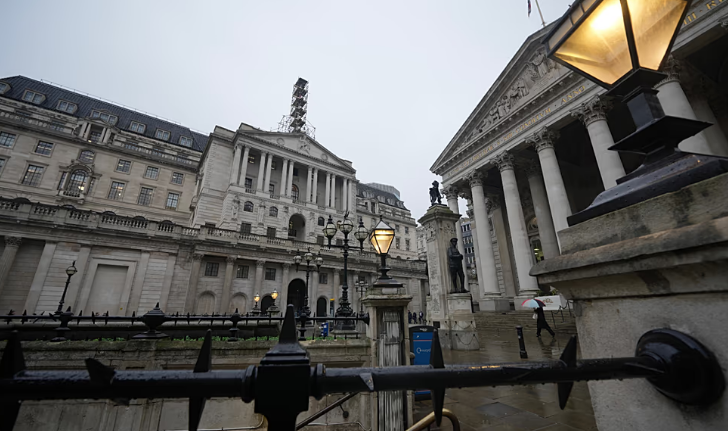
Britain’s cost of living rose more sharply in March as the impact of the Iran conflict pushed fuel prices higher, forcing financial markets to rethink expectations for an imminent interest rate cut by the Bank of England.
According to the Office for National Statistics, the annual consumer price inflation rate increased to 3.3% in March from 3% in February, in line with forecasts but still marking a clear acceleration in price pressures. The main driver was a steep rise in motor fuel costs, which jumped 8.7% in a single month—the sharpest increase since the summer of 2022, when global energy markets were disrupted following Russia’s invasion of Ukraine.
The surge in petrol and diesel prices has begun to filter through the wider economy, affecting transport costs, airfares, and food supply chains. Analysts say the escalation reflects continued strain in global oil markets, where uncertainty linked to the Iran war has tightened supply routes and pushed up wholesale energy prices.
UK Treasury officials have acknowledged the external nature of the shock, with Chancellor Rachel Reeves noting that although the conflict is not domestic, it is directly increasing costs for households and businesses across the country.
Investment strategist Lindsay James described the latest figures as evidence that inflationary pressure is building again rather than easing. “This morning’s inflation data showed CPI creeping back up to 3.3%, confirming that price pressures are re-accelerating rather than fading away since the outbreak of the war in Iran,” she said.
Financial markets have also been unsettled by volatility in oil supply routes, particularly through the Strait of Hormuz, which remains central to global energy transport. While equity markets have shown some recovery, physical delivery constraints continue to support higher prices.
The renewed inflation pressure has complicated the Bank of England’s policy path. Prior to the recent escalation, investors widely expected a reduction in interest rates from 3.75% as inflation appeared to be gradually returning toward the 2% target. Those expectations have now been pushed back.
Labour market data adds further complexity. Payrolled employment is declining, economic inactivity is rising, and wage growth is slowing—signs of a cooling economy that would normally support rate cuts.
For households, the combination of rising essential costs and weaker earnings growth is tightening real incomes. Economists warn that if inflation climbs closer to 4% in the coming months, the Monetary Policy Committee will face a difficult decision at its next meeting, balancing persistent external price shocks against a weakening domestic economy.
