


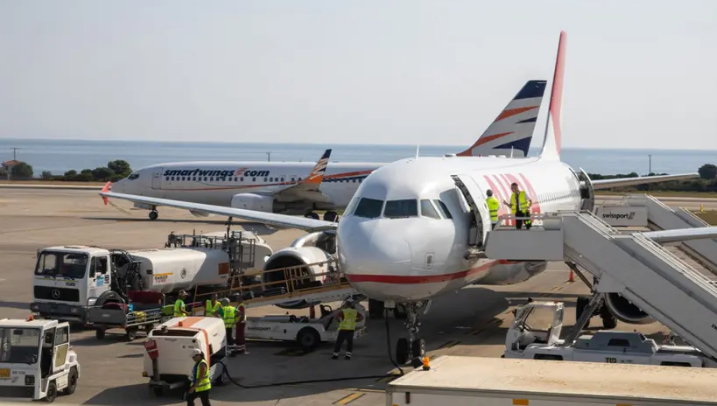
European aviation is confronting an escalating fuel emergency, with warnings that airlines could begin cancelling flights as early as June if supply disruptions from the Middle East persist, according to the International Energy Agency (IEA).
In its latest monthly oil market report, the Paris-based energy watchdog said Europe currently holds only around six weeks of jet fuel reserves. The agency cautioned that unless at least half of normal imports from the Middle East are restored or replaced through alternative routes, inventories could fall to critical levels within weeks.
The strain stems from the continued closure of the Strait of Hormuz, a key shipping route through which much of the Gulf’s jet fuel exports normally pass. The waterway was effectively shut after Iran restricted passage in response to military strikes by the United States and Israel. The disruption has driven global jet fuel prices sharply higher and left airlines across Europe scrambling to secure supply.
IEA Executive Director Fatih Birol said the situation could quickly translate into operational disruptions if conditions do not improve. He warned that flight cancellations may be unavoidable if supply chains remain blocked, reflecting the severity of the market squeeze.
Europe traditionally relies on the Middle East for roughly 75% of its imported jet fuel. While refiners in the United States have increased exports in an attempt to offset shortages, the IEA estimates that even full diversion of US supply would only cover just over half of Europe’s deficit.
The agency also noted that refiners in Asia, including those in South Korea, India and China, depend heavily on Middle Eastern crude, limiting their ability to compensate for the shortfall. This has created what the IEA described as a global bottleneck in aviation fuel distribution.
Under current projections, a replacement rate below 50% could trigger localized shortages at airports, forcing airlines to cut flights. Even with a higher substitution rate of around 75%, pressure on supply is expected to persist into August, particularly during peak summer travel demand.
Fuel costs are already weighing heavily on airlines, with jet fuel accounting for up to 40% of operating expenses. Prices in Europe recently surged to record levels of around $1,838 per tonne, more than double pre-conflict rates.
While the European Commission has said there are currently no confirmed shortages, it has acknowledged rising risks and begun coordinating weekly assessments with member states. Airports and industry groups have warned that supply disruptions could materialise within weeks if the Strait of Hormuz remains closed.
With fuel costs soaring and supply uncertainty deepening, Europe’s aviation sector is entering a period of heightened instability, with carriers, airports and logistics operators preparing for a potentially difficult summer ahead.
