


A viral social media comparison drawing parallels between the current US military operation against Iran and Portugal’s 16th-century conquest of Hormuz has prompted historians to examine where the similarities hold—and where they do not.
The online post suggests that Portugal secured lasting control of the strategic Strait of Hormuz in 1515 with limited forces, while avoiding the kind of economic disruption seen in modern US military actions. However, historians say the comparison mixes accurate historical detail with significant exaggeration.
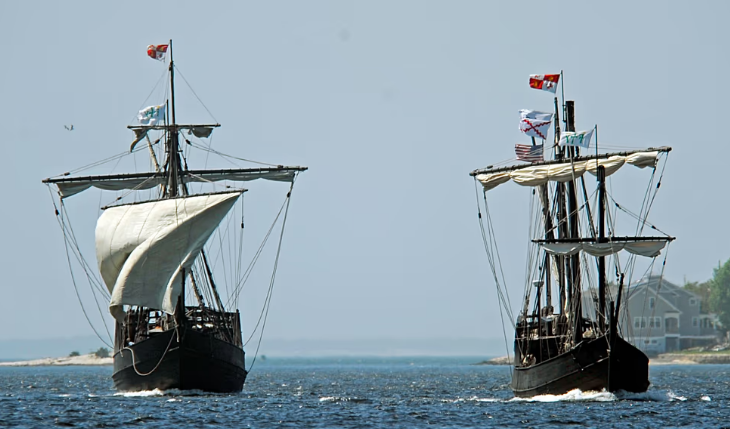
According to historian Rui Manuel Loureiro, Portugal’s expedition to Hormuz did involve around 27 ships and roughly 1,500 Portuguese troops alongside 600 to 700 Indian auxiliaries. The campaign, led by Afonso de Albuquerque, did establish Portuguese control over the island of Hormuz, which lasted until 1622, when a Persian-English alliance ended their presence.
However, Loureiro cautioned against claims of long-term or total dominance. He said Portuguese control lasted around 107 years and was largely confined to the island and a few nearby dependencies, not the wider Persian Gulf. He also rejected the idea of a complete monopoly over regional trade, noting that Arab and Persian shipping continued and many vessels operated beyond Portuguese interference.
“There was Portuguese disruption of trade, but not full control of maritime traffic,” Loureiro said, adding that the Indian Ocean remained far too vast for any single power to dominate fully.
The historian also drew a key distinction between the two eras. Portugal’s strategy, he said, focused narrowly on controlling Hormuz without engaging major continental powers like Persia. By contrast, the modern US involvement in Iran has placed Hormuz itself under pressure as a consequence of broader military operations against a regional state.
Contemporary historian Bruno Cardoso Reis highlighted the scale and cost of the current US deployment. Estimates from research institutions suggest tens of billions of dollars have been spent in recent weeks, with some figures placing daily operational costs at around $500 million. US forces in the region are reported to exceed 50,000 personnel, supported by more than 130 aircraft and multiple naval assets spread across Gulf bases.
Reis noted that while the US retains overwhelming military superiority, modern warfare dynamics differ significantly. Cheaper, more accessible technologies allow smaller actors to disrupt strategic waterways such as the Strait of Hormuz, complicating traditional power projections.
He added that the broader consequences of the conflict include strain on global energy markets, disruptions in Gulf states, and rising uncertainty in international shipping routes. Despite diplomatic efforts to stabilise the situation, tensions remain unresolved.
Both historians agreed that while the Portuguese campaign and the current US operation involve control of a critical maritime chokepoint, the scale, geopolitical context, and technological realities differ fundamentally.
