


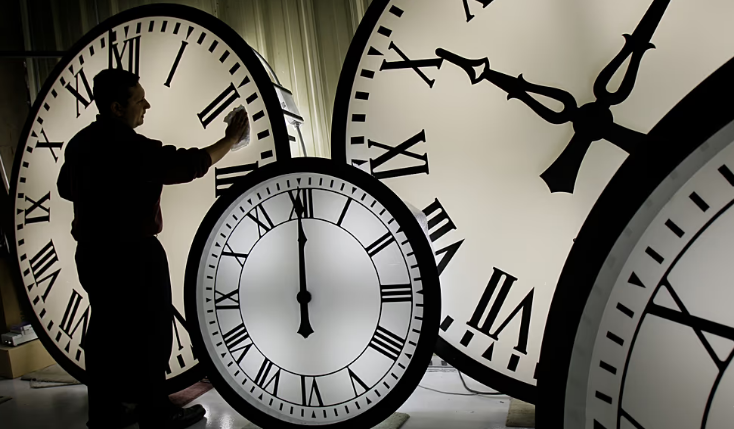
As Europe’s clocks move forward this Sunday, health experts warn that even a one-hour shift disrupts the body’s circadian rhythms. On March 29, most Europeans will lose one hour of sleep, and evenings will gradually become longer. The twice-yearly clock changes were originally introduced to save energy during the First World War and were reintroduced in the 1970s, but researchers now caution that the springtime shift can affect both sleep and overall health.
While a one-hour change may seem minor, studies show it can significantly disrupt the circadian rhythm, the body’s internal 24-hour clock that regulates sleep, hormone production, alertness, and mood. “Most people should be able to adjust and adapt within a week, but we also know that there are people who struggle with adapting their clock and can take weeks, if not months, for the body clock to adjust to just one hour change,” said Jeffrey Kelu, a post-doctoral research associate studying circadian rhythms at King’s College London.
The springtime change has been linked to short-term spikes in traffic accidents, heart attacks, and depressive episodes. People often welcome the extra daylight in the evenings, but prolonged exposure to light can delay the body’s release of melatonin, the hormone that signals sleep. Kelu explained that light exposure late in the day can make it harder to fall asleep. He recommends blacking out bedrooms to help the body recognize that it is time to rest.
Circadian rhythms are crucial for overall health. When aligned with the 24-hour day, they help regulate sleep, metabolism, and daily activity. Disruptions to the body clock, caused by irregular sleep, shift work, jet lag, or nighttime light exposure, have been linked to obesity, heart disease, type 2 diabetes, high blood pressure, and even dementia. People with strong rhythms are more likely to maintain consistent sleep schedules, even when external conditions change.
The seasonal clock changes have faced repeated calls for abolition. In 2018, the European Commission proposed ending them after a public consultation in which 84 percent of respondents supported stopping the practice. However, disagreements among member states stalled the initiative. Scientists advocate for permanent standard time, or winter time, arguing that morning light is essential, especially in winter, to help regulate the body clock. Kelu noted that permanent summertime would deprive people of natural light in the mornings, leaving them exposed mainly to artificial light during working hours.
Health experts urge people to prepare for the time change by adjusting sleep schedules gradually, limiting light exposure before bed, and ensuring bedrooms are dark and quiet. Even a single hour shift can affect the body more than many realize, highlighting the ongoing challenges posed by seasonal time changes.
