


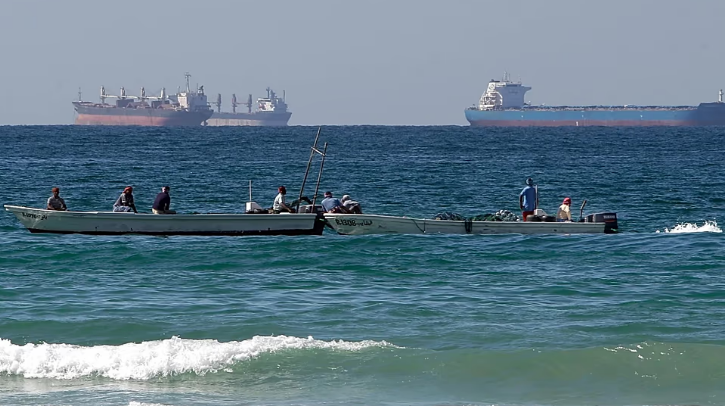
Rising tensions in the Middle East have sent crude oil and natural gas prices soaring after Iran announced the closure of the Strait of Hormuz, a key shipping corridor through which about 20 percent of the world’s oil passes. European governments are now scrambling to manage the fallout and prevent a broader energy crisis.
The Strait, lying between the Persian Gulf and the Gulf of Oman and largely under Iranian control, is critical for global energy flows. While experts say the closure will not cut off Europe’s oil supply entirely, it is expected to push prices higher and disrupt markets for months. Countries including Italy, Greece, Spain, Poland and Belgium rely on oil from Gulf producers either for refining or direct imports.
European Commission officials convened technical experts on Wednesday to evaluate the situation. The bloc’s oil imports are diversified, with Norway, the United States, and Kazakhstan accounting for the largest shares, but several EU countries import crude from Saudi Arabia, which made up 6.8 percent of the bloc’s total imports in the first nine months of 2025. Spain, Germany, France and the Netherlands are among the main recipients of Gulf oil.
Analysts say alternative pipelines could mitigate some of the disruption. The Saudi East-West pipeline, which runs from the Abqaiq processing center to the Red Sea port of Yanbu, can transport up to five million barrels per day, though its infrastructure limits maximum throughput. The UAE’s Habshan–Fujairah pipeline offers 1.8 million barrels per day capacity but is already heavily used for routine exports. Iran’s recently built Goreh-Jask pipeline has capacity for only around 300,000 barrels per day and faces operational challenges due to sanctions and military attacks.
Even if these pipelines operate at full capacity, they could carry only a fraction of the roughly 20 million barrels that normally transit the Strait each day. Shipping through the corridor has largely halted after vessels were targeted during Iranian retaliatory strikes, and insurers have cancelled war-risk coverage. Tankers may attempt longer routes around the Cape of Good Hope, adding time and costs.
Europe does have alternative supply sources. North Sea production from Norway and the UK, along with crude from West Africa and Latin America, can bypass Middle Eastern chokepoints. Algeria and Libya provide shorter Mediterranean routes into southern Europe, though political instability in Libya is a recurring risk. Kazakhstan and Azerbaijan supply the EU via the Caspian Sea and Turkish Straits.
Pauline Heinrichs, lecturer in War Studies at King’s College London, said the crisis highlights Europe’s energy vulnerabilities. “Our security strategy is currently reduced to responding to fossil fuel-induced crises, both in terms of fuel itself and the powers that rely on it,” she said.
European leaders now face the challenge of mitigating the immediate price shock while planning longer-term strategies to reduce dependency on unstable routes and regions, balancing market access with energy security.
