


On Saturday morning, the United States and Israel launched a joint military operation against Iran, prompting retaliatory strikes that reportedly caused explosions in the United Arab Emirates, Qatar, Bahrain, and Kuwait. The escalation has raised fears of a broader regional conflict and triggered concerns over global energy supplies.
Oil markets are on alert as the strikes risk disrupting the flow of crude from one of the world’s major producers. Iran has repeatedly warned of potential blockades of the Strait of Hormuz, a critical maritime corridor connecting Middle Eastern oil producers to global markets. In 2024, roughly 20 million barrels of crude passed through the strait daily, accounting for nearly 20% of global oil consumption, according to the US Energy Information Administration.
Iran remains one of the world’s top ten oil producers. While its output has declined since US sanctions in 1979—from around six million barrels per day in 1974 to roughly 3.1 million today, according to OPEC—its crude remains cheap to extract, costing as little as $10 (€8.46) per barrel. In comparison, production in Canada and the US typically ranges from $40 (€33.85) to $60 (€50.77) per barrel, while only Saudi Arabia, Iraq, Kuwait, and the UAE have comparable low-cost production. China is the primary consumer of Iranian oil, accounting for more than 80% of exports.
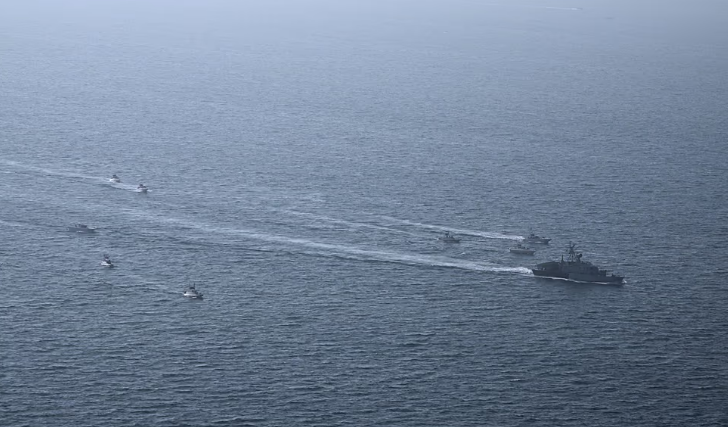
The Strait of Hormuz has become a focal point in the escalating tensions. The waterway is wide and deep enough to accommodate the world’s largest tankers, but alternative routes for oil transport are limited. Previous closures for live-fire drills by Iran have heightened concerns, especially after Washington’s threats of military action. Last week, Iran temporarily closed the strait for such exercises, marking the first closure since recent US warnings.
Tensions have also been fueled by stalled negotiations over Iran’s nuclear program. The US and Tehran have sought an agreement to limit Iran’s nuclear activities, but repeated warnings from Iran regarding military actions in the Gulf have increased instability in the region.
The recent strikes, along with retaliatory attacks, underscore the vulnerability of global energy supplies to geopolitical conflict. Analysts warn that any disruption in the Strait of Hormuz could push crude prices higher, potentially affecting markets worldwide.
As military operations continue, global energy watchers and governments are monitoring the situation closely, with concerns mounting over both regional security and the stability of oil exports from the Middle East.
Word count: 457
