


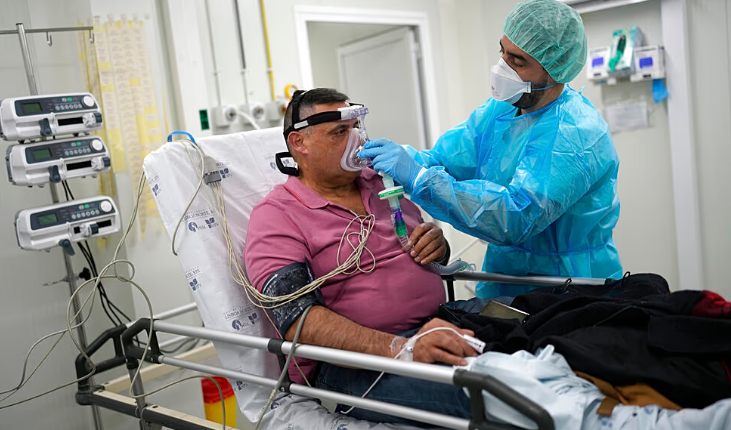
As climate change worsens respiratory diseases, doctors and drugmakers are exploring earlier diagnosis and low-carbon inhalers to cut emissions from care and protect patients.
For millions of people worldwide, climate change is already affecting breathing. Rising air pollution, longer pollen seasons, and smoke from wildfires are contributing to asthma attacks, lung damage, and other chronic respiratory illnesses. At the same time, the health systems treating these conditions are themselves contributing to greenhouse gas emissions.
Experts note that over 90 percent of the global population breathe air with particulate levels above World Health Organization recommendations. Climate extremes and poor air quality are increasing the frequency and severity of respiratory diseases, from exacerbations to disease onset. Therese Laperre, head of the respiratory department at University Hospital Antwerp, said changes in particulate matter can trigger emergency visits for asthma and chronic pulmonary diseases days later. A European Environment Agency study estimated that more than a third of chronic respiratory disease deaths in Europe are linked to environmental factors such as pollution, extreme temperatures, wildfire smoke, and allergenic pollen.
Worldwide, an estimated 400 to 500 million adults live with COPD, and over 250 million have asthma. Health care responses come with their own climate cost. Health Care Without Harm estimates global health services generate about five percent of worldwide greenhouse gas emissions, which could rise to six gigatons annually by 2050 if unchecked, equivalent to more than a billion cars on the road. Hospitals, particularly intensive care units, are among the most carbon-intensive, due to high energy use, equipment, and single-use materials.
Respiratory specialists emphasize that early disease control benefits both patients and the environment. Philippe Tieghem from the French respiratory association Sante Respiratoire said early diagnosis allows for better patient care while reducing emissions.
Inhalers, commonly used to treat asthma and COPD, illustrate the challenge. Traditional pressurised metered-dose inhalers (pMDIs) use hydrofluorocarbon propellants, which contribute 16–17 million tonnes of CO₂-equivalent emissions globally each year. The UK’s National Health Service estimates these inhalers account for around three percent of its carbon footprint.
Pharmaceutical companies are developing greener alternatives. AstraZeneca’s reformulated COPD inhaler uses a new propellant, HFO‑1234ze(E), cutting its global warming potential by roughly 99.9 percent compared with older devices. The company has pledged to reduce its emissions by 98 percent by 2026, starting with inhalers. Pfizer and Johnson & Johnson have committed to net-zero targets by 2040 and 2045, respectively.
Pablo Panella, senior vice-president for respiratory diseases at AstraZeneca, told Euronews Health that early detection, diagnosis, and treatment keep patients controlled in the community, reducing hospital admissions and the high-carbon interventions that come with them. Panella also stressed the importance of regulation that supports innovation, allowing low-carbon technologies to reach patients more quickly.
Better disease control, combined with environmentally conscious products, is creating the concept of the “green patient”: someone whose chronic condition is managed well enough to avoid repeated flare-ups, hospital stays, and carbon-intensive treatments.
