


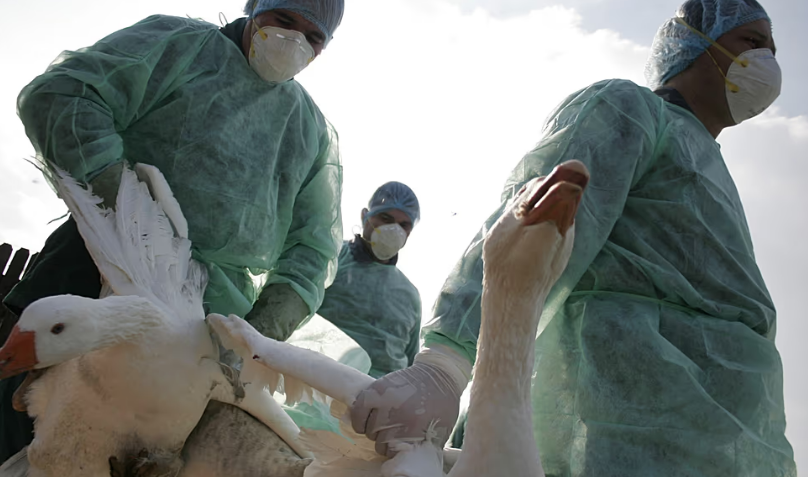
Scientists have used simulations to show how avian influenza, commonly known as bird flu, could jump from birds to humans if vaccination and containment measures are delayed. The research highlights the importance of swift action to prevent small outbreaks from turning into wider epidemics.
The study, conducted by Ashoka University and published in BMC Public Health, focuses on highly pathogenic avian influenza (HPAI), a virus that experts from the World Health Organization (WHO) have identified as a potential source of a future pandemic, sometimes referred to as “Disease X.”
Researchers recreated a scenario in a small village in Tamil Nadu, southern India, home to more than 1,600 poultry farms raising over 70 million chickens. The simulation began with a small number of infected birds and no infected humans, modeling two scenarios. In the first, infected birds were rapidly contained, preventing any human cases. In the second, delayed containment or insufficient culling allowed several farm workers to become infected.
In most scenarios where infected birds were quickly removed, the virus did not reach humans, underscoring the effectiveness of early intervention. However, in cases where human infection occurred, workers became infectious after a three-day latent period and could spread the virus to household members over a seven-day period.
The researchers identified a narrow window for containing the virus once human cases emerge. If households are quarantined at the first signs of infection, the outbreak can be contained. By the time infections reach around 10 cases, however, some individuals may have already gone to work or school, spreading the virus into the wider community. At this stage, new chains of transmission form, and quarantining the original households is no longer sufficient.
Mathematical modeling in the study shows that delaying quarantine until 10 cases produces epidemic curves similar to scenarios without any early intervention. The findings suggest that controlling avian flu before community transmission begins is critical. Once the virus spreads broadly, only wide-ranging measures such as mass vaccination or lockdowns are likely to be effective.
Avian influenza has been spreading at elevated levels globally over the past five years, affecting wild and farm birds across Europe, and in some cases spreading to mammals such as mink, cats, and even a captive bear. The European Centre for Disease Prevention and Control (ECDC) reported this month that the magnitude and geographic reach of recent bird flu detections were unprecedented for this time of year.
The study notes some limitations, including that the simulation does not account for multiple outbreak sites, changes in human behaviour such as using personal protective equipment, or the role of intermediate mammal hosts. Despite these limitations, the research provides a clear warning about the importance of rapid containment and proactive measures in preventing bird flu from becoming a human epidemic.
