


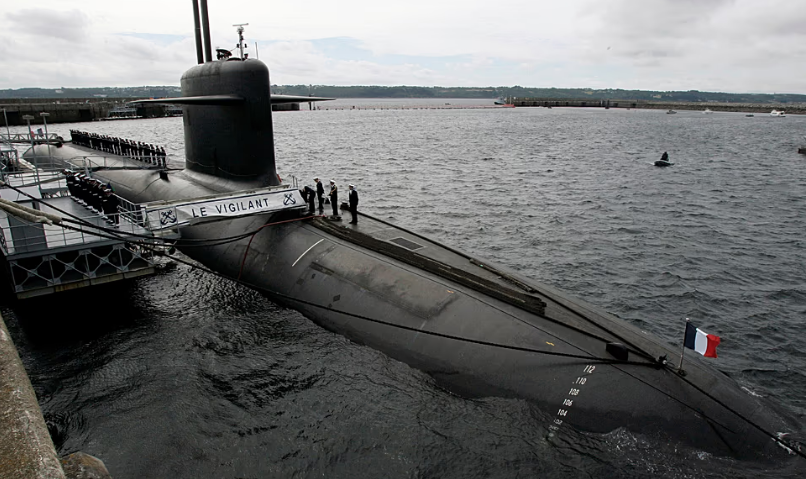
As geopolitical friction with Russia intensifies, European interest in advanced military capabilities—including nuclear-powered submarines—is becoming more pronounced. Yet defence specialists caution that such vessels may not align with Europe’s most immediate security needs.
Only six nations currently operate nuclear-powered submarines: France, the United Kingdom, the United States, Russia, China, and India. The technology is tightly controlled due to its strategic significance, but recent events have thrust it back into the spotlight.
French forces opened fire last week on unidentified drones flying over a nuclear submarine base in Brittany, raising fresh questions about security surrounding these assets. In November, Washington signalled support for South Korea’s ambitions to build nuclear attack submarines as part of efforts to counter North Korea—marking a shift for the US, which traditionally limited the transfer of such propulsion technology. Russia has also expanded its fleet, rolling out the new Khabarovsk-class nuclear submarine.
A “nuclear submarine” can either refer to a submarine powered by a nuclear reactor or one that carries nuclear weapons. Nuclear-powered vessels rely on heat from onboard reactors to run their propulsion systems, allowing them to stay submerged for months with minimal need for resupply. This endurance makes them difficult to track and valuable for intelligence and deterrence missions.
“Nuclear-powered submarines offer an enormous supply of energy for long durations, which is what makes them important for the countries that operate them,” Hans Liwång, a defence systems professor at the Swedish Defence University, said in an interview.
However, Liwång stressed that Europe’s current security challenges do not necessarily require an expansion of nuclear-powered fleets. The war in Ukraine and NATO’s regional concerns largely revolve around shallow coastal waters and confined maritime zones, including the Baltic Sea—areas where large nuclear-powered submarines struggle to operate covertly.
He explained that diesel-electric submarines, which are smaller, quieter in certain conditions, and much cheaper to maintain, are better suited for these environments. “For most European countries, having several conventional submarines is far more important than seeking the advanced specifications of nuclear-powered vessels,” Liwång said.
The practical drawbacks of nuclear propulsion also weigh heavily. The reactors take up significant internal space, and refuelling them can require dismantling the vessel, often keeping it out of service for up to a year.
Still, Liwång acknowledged that nuclear-powered submarines hold strategic value for operations in the deeper waters of the Atlantic, especially as Russia increases activity near areas such as Greenland and Iceland. These regions remain critical to NATO’s broader deterrence and surveillance posture.
“I see a need for ensuring European countries can contribute to Atlantic defence,” he said, noting that nuclear-powered submarines may form part of that effort alongside conventional submarines and surface fleets.
While he does not view them as an urgent priority for Europe, Liwång warned that global developments—from South Korea’s ambitions to Russia’s growing fleet—could influence Europe’s future defence calculations.
